Mass timber post-occupancy evaluations
Happy Cities is conducting post-occupancy evaluations of B.C. mass timber buildings for Forestry Innovation Investment. The research aims to understand how biophilic design features can support occupant wellbeing and satisfaction.
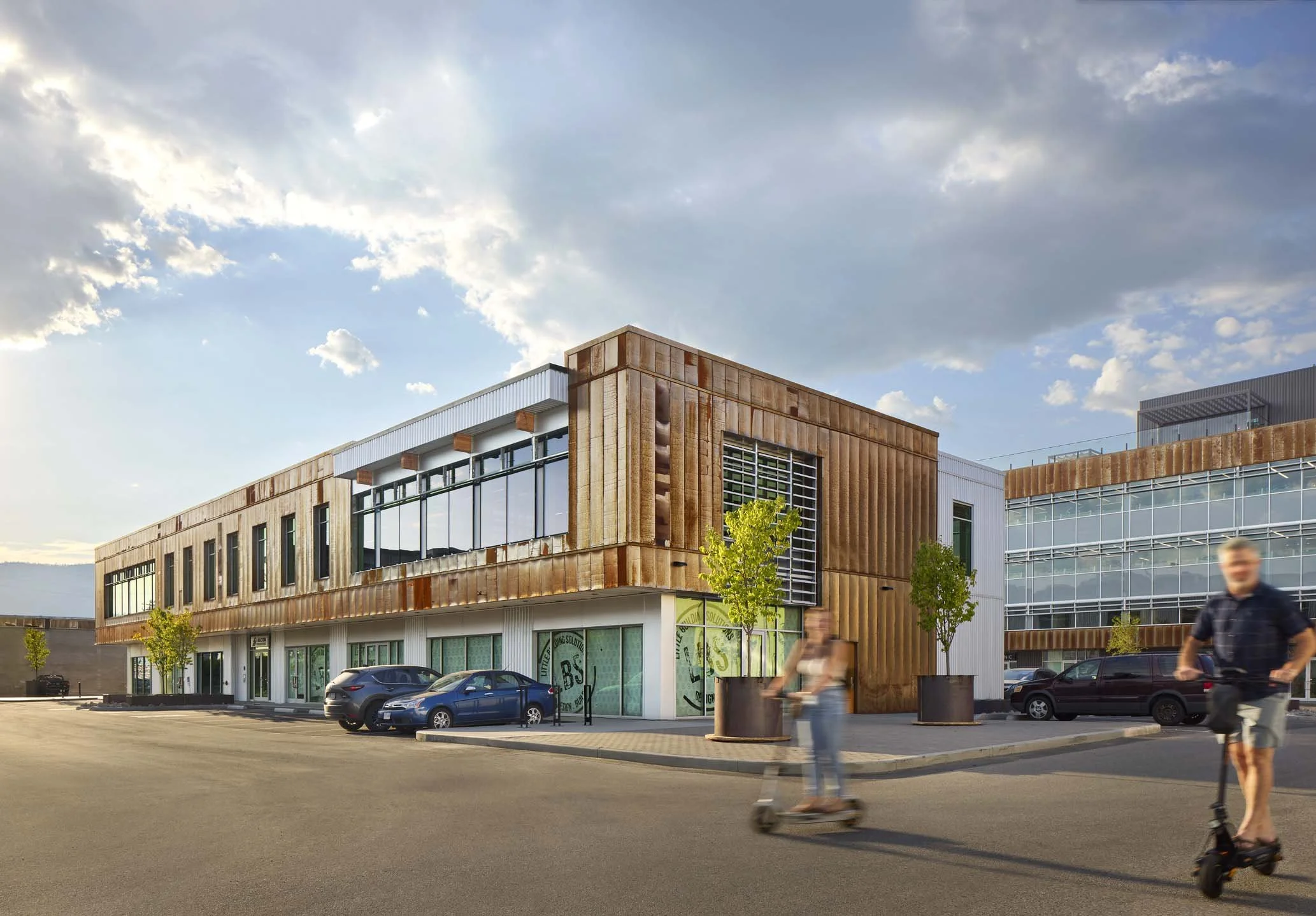
(Ed White Photographics / naturallywood.com)
Interest in mass timber buildings has taken off in recent years as demand grows for more sustainable construction. However, there has been relatively little research in B.C. on the social benefits of wood buildings.
This research project aims to build a greater evidence base around mass timber buildings, with a focus on occupant experience and how biophilic design features shape human wellbeing.
What is biophilic design?
Biophilic design aims to connect people to nature through the inclusion of natural features in buildings. Biophilic design features may include natural light, views to nature, plants, water features, exposed wood or stone, use of other natural materials, natural sounds, art depicting nature).
Post-occupancy study of mass timber office buildings
Happy Cities worked with Forestry Innovation Investment (FII) to develop a case study of two mass timber office buildings at the Exchange development in Kelowna, B.C. Our team conducted surveys, interviews, and building design audits to assess the links between biophilic design features and occupant satisfaction, productivity, and wellbeing.
Overall, the study shows high employee satisfaction with the building’s biophilic design, including particular importance of natural daylight and exposed wood surfaces.
Future research directions
As more mass timber buildings reach completion, Happy Cities and FII will explore opportunities to conduct more pre- and post-occupancy evaluations of commercial, residential, and public buildings.
Interested in participating in the research? Contact us to learn more!