Renewing Helmcken House: Solutions for aging communities
Happy Cities worked with McLaren Housing Society of British Columbia to identify solutions for supporting resident wellbeing and aging in place.
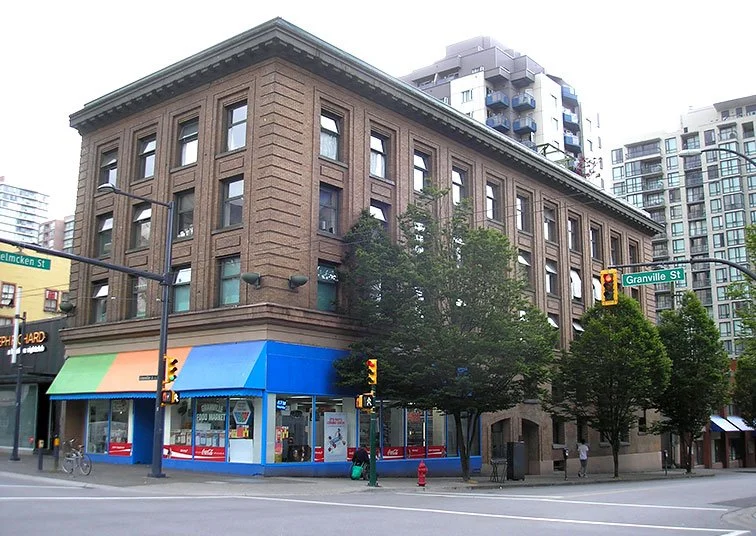
Helmcken House. (McLaren Housing Society)
McLaren Housing Society has spent nearly four decades providing dignified, deeply affordable homes for people living with HIV/AIDS. As residents age, many are expressing a strong desire to remain housed by McLaren but face growing health, accessibility, and support challenges.
Non-market housing solutions for aging in the right place
Happy Cities partnered with McLaren Housing Society to explore how Helmcken House, a 32-home building opened in 1991, can better support residents to age in place. The project combined resident and staff engagement, a building accessibility audit, and strategic planning to create a clear, actionable pathway for McLaren to support existing and future residents to age in the right place.
The work is situated within a broader shift across the housing sector, where providers are grappling with how to define supportive housing and develop models that allow people to age in the rightplace. These models offer more support than independent housing, but do not offer the same level of services as typical supportive housing models.
Helmcken House currently operates as independent housing. For aging residents, this creates a difficult tradeoff:
Staying in place in independent housing cannot offer residents the supports they increasingly need
Moving into supportive housing with greater services may not meet their social needs, as it requires people to move out of the community/away from the neighbours they are familiar with
Without alternative options, residents may end up leaving McLaren for assisted living or other seniors housing models. If they are forced to leave their home, residents risk losing their tight-knit community, which offers an important support system for residents living with HIV/AIDS—who have often faced stigma across the health care and housing system.
Exploring social wellbeing and resident needs at Helmcken House
Happy Cities led a mixed-methods research process that brought together lived experience, organizational insight, and spatial analysis, including:
Background research on aging, housing, and care systems
Interviews with residents, staff, and leadership
A full building accessibility audit
Resident survey (95 responses across both McLaren buildings)
A collaborative workshop with McLaren’s board and team
Strategic planning and implementation roadmap
Survey and interview findings revealed:
Eighty-four per cent of respondents expressed they want to stay in their homes for as long as possible
All respondents anticipated needing more support as they age
Nearly 40 per cent struggle financially
Helmcken House has significant accessibility barriers, from bathrooms and kitchens to common spaces
This research integrated a social wellbeing, design, and operations lens—recognizing that aging in place is not just a building issue, but a systems challenge spanning housing, health, funding, and care models.
Together, we co-created a vision for a wellbeing-centred approach to aging, where residents can remain in their community with the right mix of housing, care, and social support.
Key learnings for the housing industry
Through this study, two critical system shifts were identified. Key recommendations included:
Operational shift: Redefine Helmcken House’s role in the housing continuum
Collaborate with BC Housing to clarify levels of care
Bridge the gap between independent and supportive housing
Enable on-site and partner-delivered health and aging supports
Design and capital shift: Invest in accessibility and social infrastructure
Prioritize in-place upgrades without displacing residents
Improve home accessibility (bathrooms, kitchens, circulation)
Create safer, more welcoming, and more social common spaces
Beyond solutions for Helmcken House, the project outlines a model for how non-profit housing providers can respond to aging populations by:
Considering solutions for aging in the right place, not just aging in place
Integrating care into housing
Designing buildings that support dignity, safety, and connection
Defining models of supportive housing specifically for seniors