Rural bus stops accessibility guidelines
Design guidelines to help rural communities implement more accessible bus stops, created for the Nova Scotia Community Transportation Network.
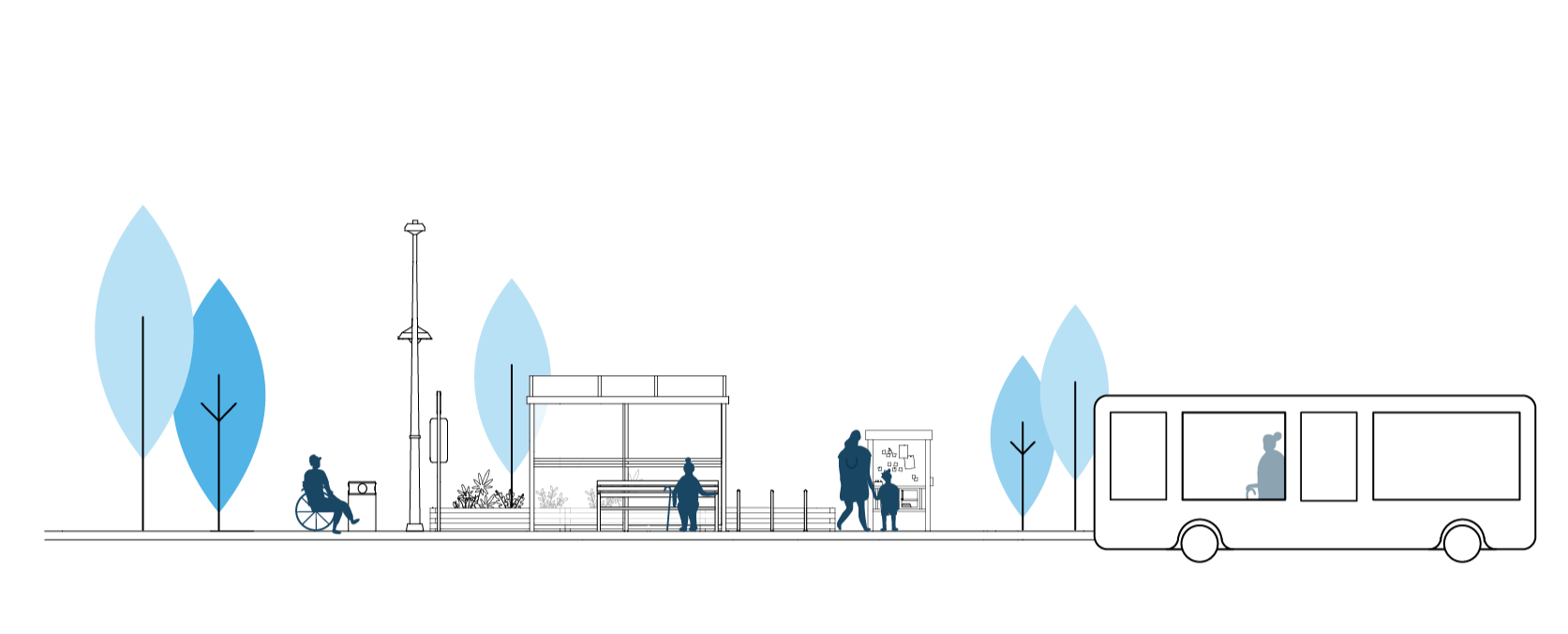
Accessible bus stops offer a safe, comfortable waiting and boarding experience for everyone. (Happy Cities)
Safe, accessible transit for everyone
Older adults and people with disabilities often rely on transit to access shops, services, and social activities. However, bus service is only effective when people can safely get to and board the bus.
Happy Cities worked with the Nova Scotia Community Transportation Network to create a set of design guidelines for rural communities across Nova Scotia to plan and upgrade bus stops that support comfort and safety for riders of all ages and abilities.
Rural transit agencies operate within unique contexts
Buses come less often in rural areas, meaning that riders often spend more time waiting at a stop. At the same time, rural roads may lack the pedestrian infrastructure that is common in bigger cities, like sidewalks and street lighting. Further, rural transit agencies often have limited funding, creating a need for clear guidance and criteria to help prioritize upgrades where they can have the greatest impact.
In Nova Scotia, winter snow and ice can pose additional barriers, creating a need for clear standards around maintenance and accessibility.
Design guidelines for accessible bus stops
Our team created a set of design guidelines for accessible bus stops, drawing on provincial and federal accessibility standards—alongside practical experience working with rural transit systems.
The guidelines consider dignity and independence along a rider’s entire journey, from approaching the stop, to waiting, to boarding and alighting. The document offers detailed criteria for:
Sidewalks and maintenance
Crosswalks
Bus stop signage
Seating
Shelter
Schedules, maps, and information
Lighting
The document also covers other amenities that support comfort and usability at bus stops, such as bike racks, garbage bins, shade, and placemaking
The guidelines align with the Nova Scotia Accessibility Act, the Built Environment Accessibility Standard Regulations, coming into effect in 2026, and CSA B651:23.
Fill out the form below to get your free copy!
By downloading the guide, you agree to receive monthly updates from Happy Cities email newsletters. You can unsubscribe at any time.
How can rural communities measure accessibility?
As part of this project, Happy Cities conducted an accessibility review of bus stops for two rural transit agencies: Pictou County Transit and Antigonish Community Transit Society.
We assessed every stop according to a detailed list of criteria, offering clear recommendations and guidance to prioritize upgrades. The goal was to help both systems move toward stops that meet provincial and federal standards and support safe, independent travel.
Our audit process follows a rider‑centred approach that looks closely at how people actually move through the transit environment.
Want to know how your community compares?
Our team includes experienced RHFAC (Rick Hansen Foundation Accessibility Certification) professionals and urban designers. Get in touch to explore what an accessibility audit could look like in your community!
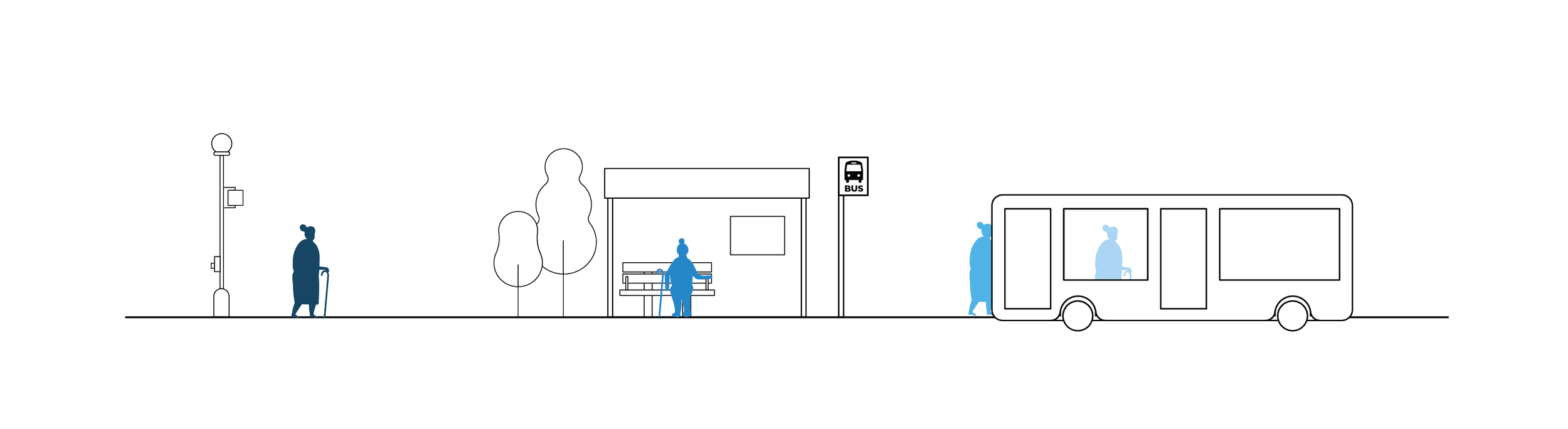
Accessible bus stops consider the whole rider experience, from the approach to the stop, to waiting, to boarding and alighting. (Happy Cities)