DASH standardized housing common space toolbox
Happy Cities developed recommendations for Metro Vancouver and BC Housing on how to design common spaces that encourage social connection.
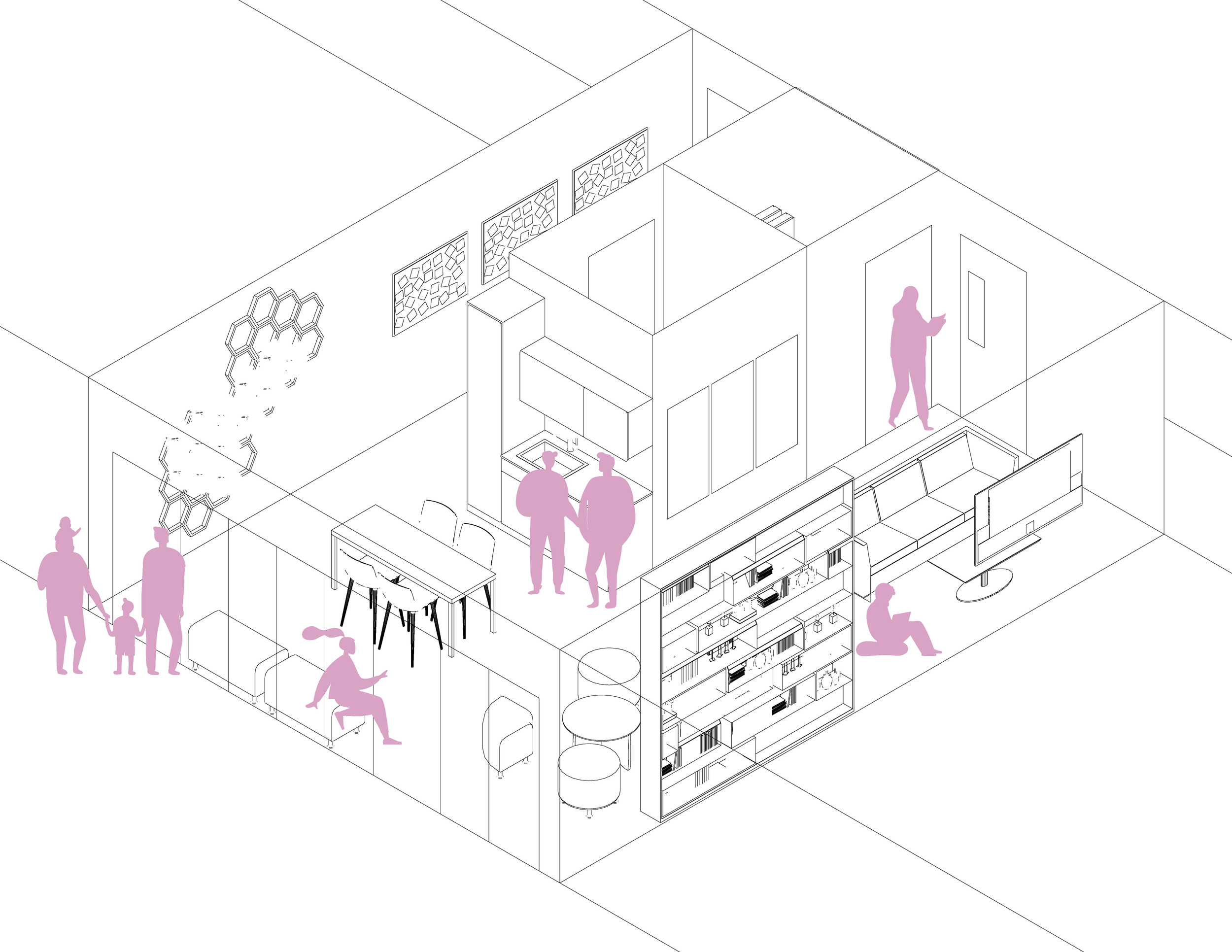
Axonometric diagram of a common space with residents interacting. (Happy Cities)
What is Digitally Accelerated Standardized Housing (DASH)?
The DASH program is an initiative by the Province and BC Housing to deliver faster, more cost-effective housing at scale, using standardized and prefabricated systems.
Happy Cities worked with Metro Vancouver to support the DASH program, providing evidence-based recommendations for common spaces that foster social connection.
We created a common space toolbox for integrating social design features into DASH projects—such as wider corridors, social nooks, and flexible amenity spaces.
How rental housing can help tackle the loneliness crisis
Rates of loneliness and social isolation are rising across Canada, posing risks for physical and mental health. The design of multi-unit housing can shape opportunities for spontaneous interaction among neighbours, whether by encouraging or limiting connection.
A design toolbox for common spaces
Happy Cities produced a recommendations report for the DASH program, identifying design opportunities for circulation paths, amenity areas, and shared spaces to help foster vibrant, health-promoting, multi-unit housing communities.
The recommendations form a design toolbox, covering 16 types of common spaces under three categories:
Indoor spaces (e.g. community rooms, social laundry, gathering nooks)
Outdoor spaces (e.g. community gardens, shared entrances, play areas)
Programming and operations
The toolbox identifies recommended and optional design features, location guidance, and infrastructure and social design considerations for each type of common space. Recommendations are organized around six principles of sociable design: location, invitation, activation, inclusion, transition, and evolution. Guidance was adjusted to consider cost, replicability, modularity, and diverse resident demographics.
The recommendations build on our Happy Homes methodology and the Building Social Connections Toolkit. The work included a review of pilot project plans, collaborative design sessions, and analysis of social space opportunities, culminating in practical design strategies to help DASH create housing strengthens neighbourly bonds and supports social wellbeing.
The importance of well-designed common spaces
Design and programming shape the success of common spaces—making the difference between whether they foster meaningful connections between neighbours, or sit empty and under-used. The common space toolbox gives the DASH team practical tools to build social connections at scale, while meeting goals around affordability and feasibility.
By integrating social design into a standardized housing model, DASH has the opportunity to create a replicable template for socially connected, health-promoting rental housing across the region. The goal? Housing that meets resident needs while supporting neighbourly bonds, belonging, and long-term happiness.