
How a beer garden is transforming vacant land in Tysons, VA
Vacant land undermines street life, public confidence, and investment momentum. Temporary uses communicate that a place is worth investing in.
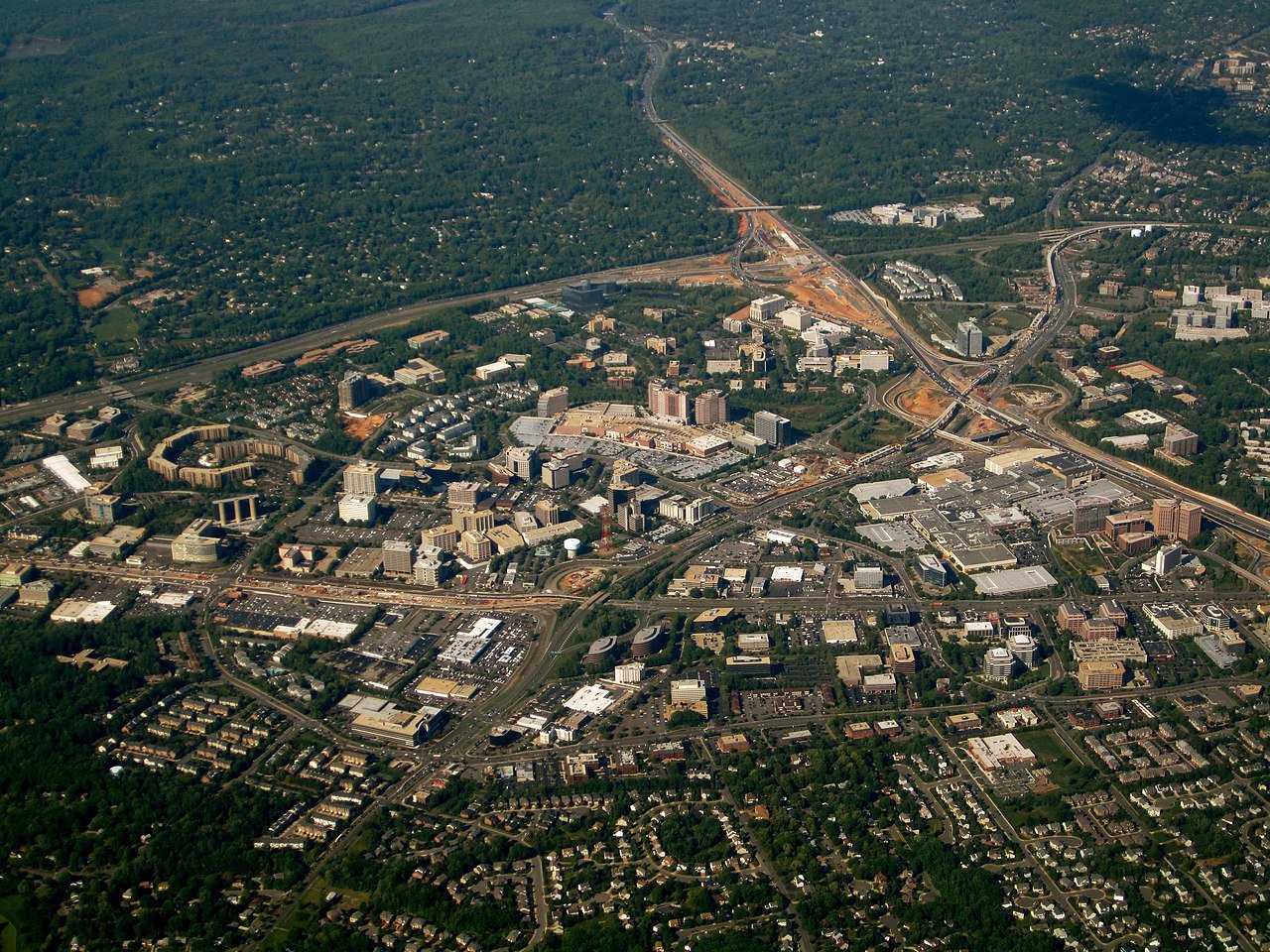
Tysons, Virginia, 2010, with a new metro line under construction. (La Citta Vita / Wikimedia Commons)
Matt Rofougaran always had a passion for hosting community events, but his home town of Tysons, Virginia never had a reputation for being much fun.
Tysons is a suburb of Washington, D.C., mostly consisting of office towers, wide roads, and parking lots.
When the Washington Metro extended its Silver Line out to Tysons in 2014, it created opportunities to build more homes, jobs, and destinations. The local government put together an ambitious growth plan, aiming to transform Tysons into a vibrant “downtown” for the wider county.
One day, while on vacation, Rofougaran walked into a beer garden in Germany and immediately felt what Tysons was missing. The energy. The vibrancy. He loved it.
He wanted to bring that feeling home. But in Tysons, land was priced for office towers, not a tent selling beer.
“It's not happening,” he remembers thinking to himself.
But then he saw an opportunity. With all the construction and redevelopment in Tysons, the area has lots of vacant land. Often, developers have to wait years for a permit before they can start building. Why not do something with it while they wait?
So he approached a developer with the idea of building a temporary bar on land that was slated for an office tower, and the developer said yes. The county allowed the temporary use.
Rofougaran took an empty piece of grass next to one of the train stations and turned it into one of Tysons’ most popular destinations—Biergarten, an outdoor bar and patio area that sometimes attracted hundreds of people at a time.
In the end, this temporary business model solved two problems at once: create a gathering place for local residents and office workers, and minimize the impact of vacant land.
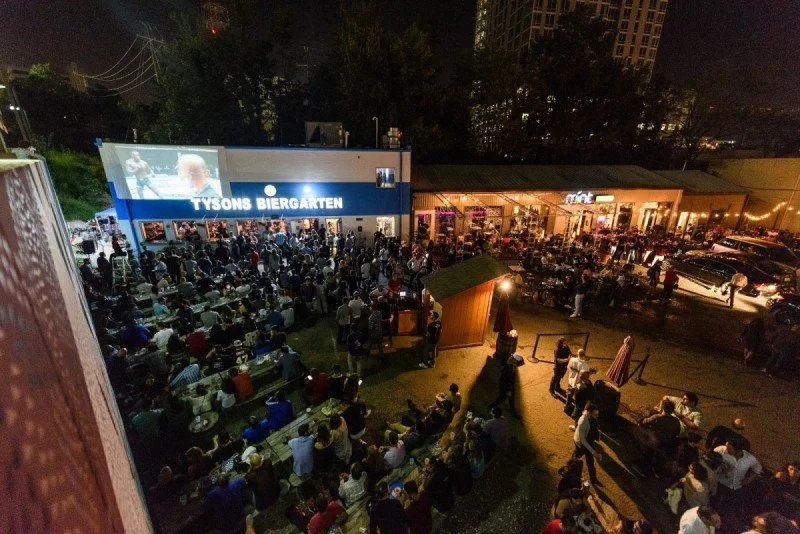
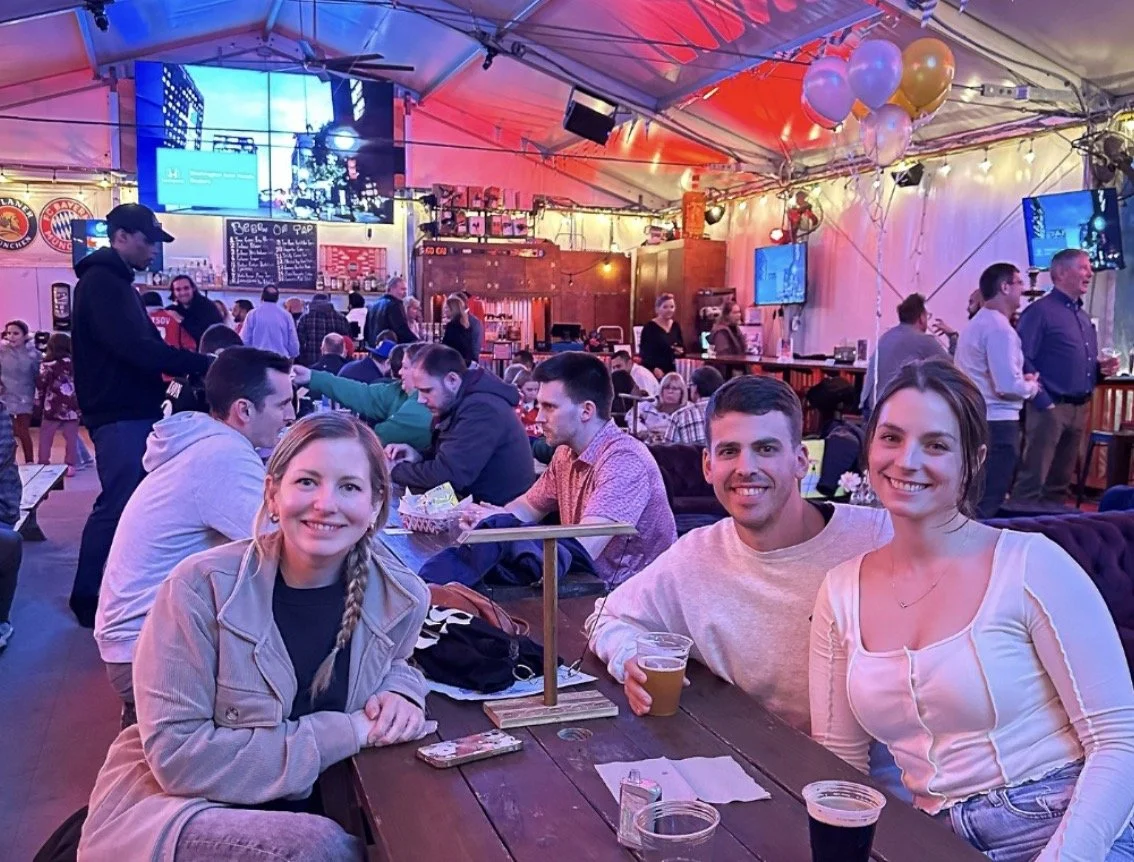
Crowds watching a boxing event at the temporary beer garden. (Tysons Biergarten)
Why vacant lots risk undermining suburban redevelopment plans
Vacant lots are common in places experiencing redevelopment, but they pose major problems for cities.
For one, they undermine people’s sense of comfort on the street and discourage people from walking there, and can encourage social disorder and crime. Vacant parcels also cut the value of nearby properties by as much as 2.3 per cent per vacant lot (within 500 feet). In Philadelphia, research found these lots reduced home values by an average of $8,000. Empty land can cause a contagion effect, in which reduced property values discourage development, leading to more vacancies, which further cuts property values.
All this is particularly dangerous for a place like Tysons, which is undergoing a major transformation from a car-dependent, suburban office district into a walkable downtown, as outlined in its comprehensive plan.
The plan has attracted investment—13.6 million square feet of development since 2010. In some places, it really is starting to feel like a proper downtown. But between these pockets of downtown-style growth, there are vast stretches of rundown, underused properties. If vacant lots discourage investment, it could sap developers’ confidence in the area’s future, and could cause this transformation to stall.
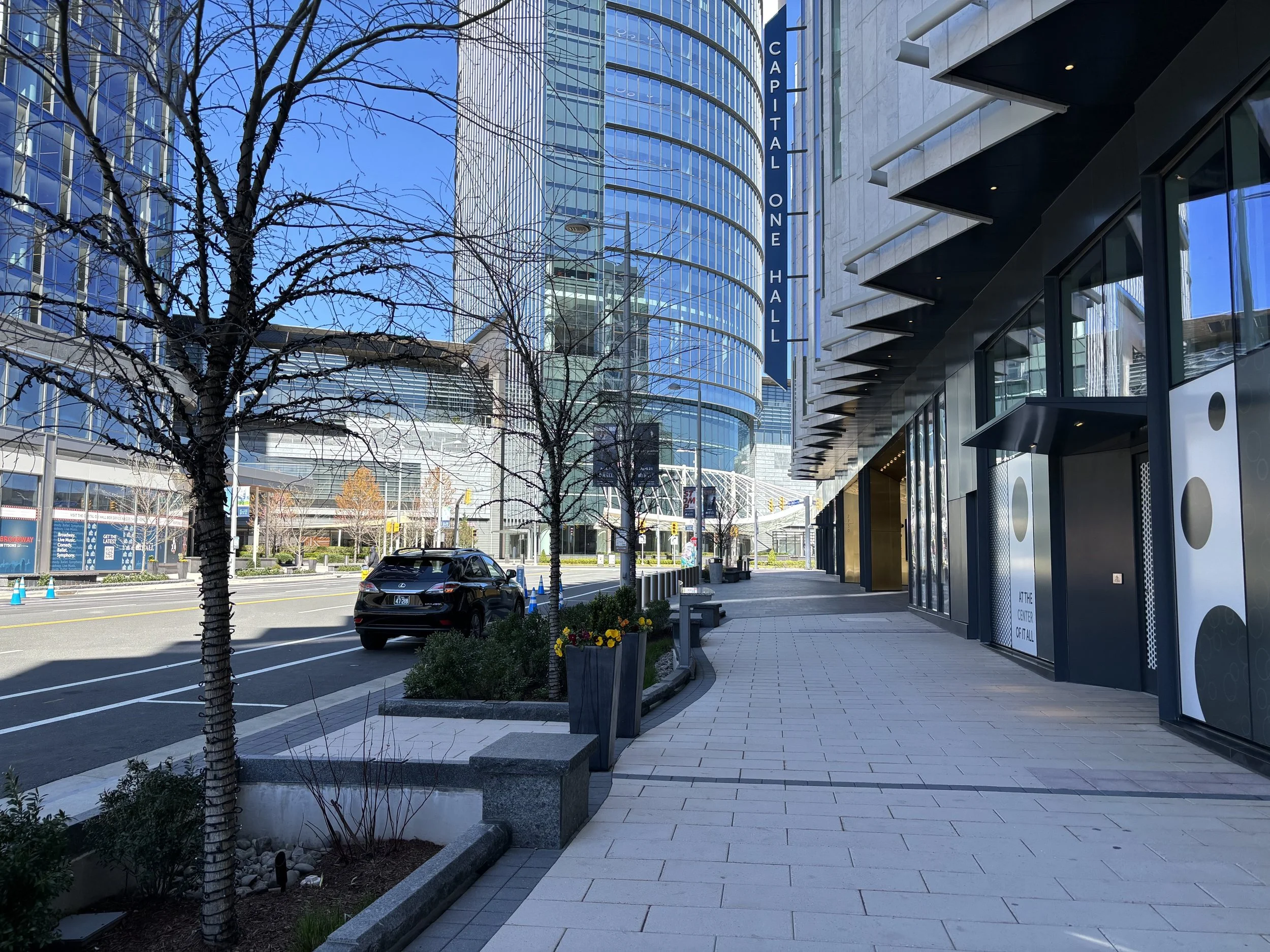
Mixed-use office development near McLean Station, Tysons. (Happy Cities)
As of late 2025, there are over 150 development applications that have yet to begin construction in Tysons (compared to 34 that have already been built, and another four under construction). While these properties await development, many remain vacant or underused, which risks undermining momentum for the community’s transformation.
The most concerning are projects that have been approved, but where developers have not started construction, whether due to high interest rates, reduced demand in offices since the pandemic, or other reasons. If these projects do not move forward, it may create a self-fulfilling fear among developers that Tysons is no longer a successful place worth betting on.
How can cities prevent this kind of stagnation? Rofougaran’s beer-tent experiment offers a solution.
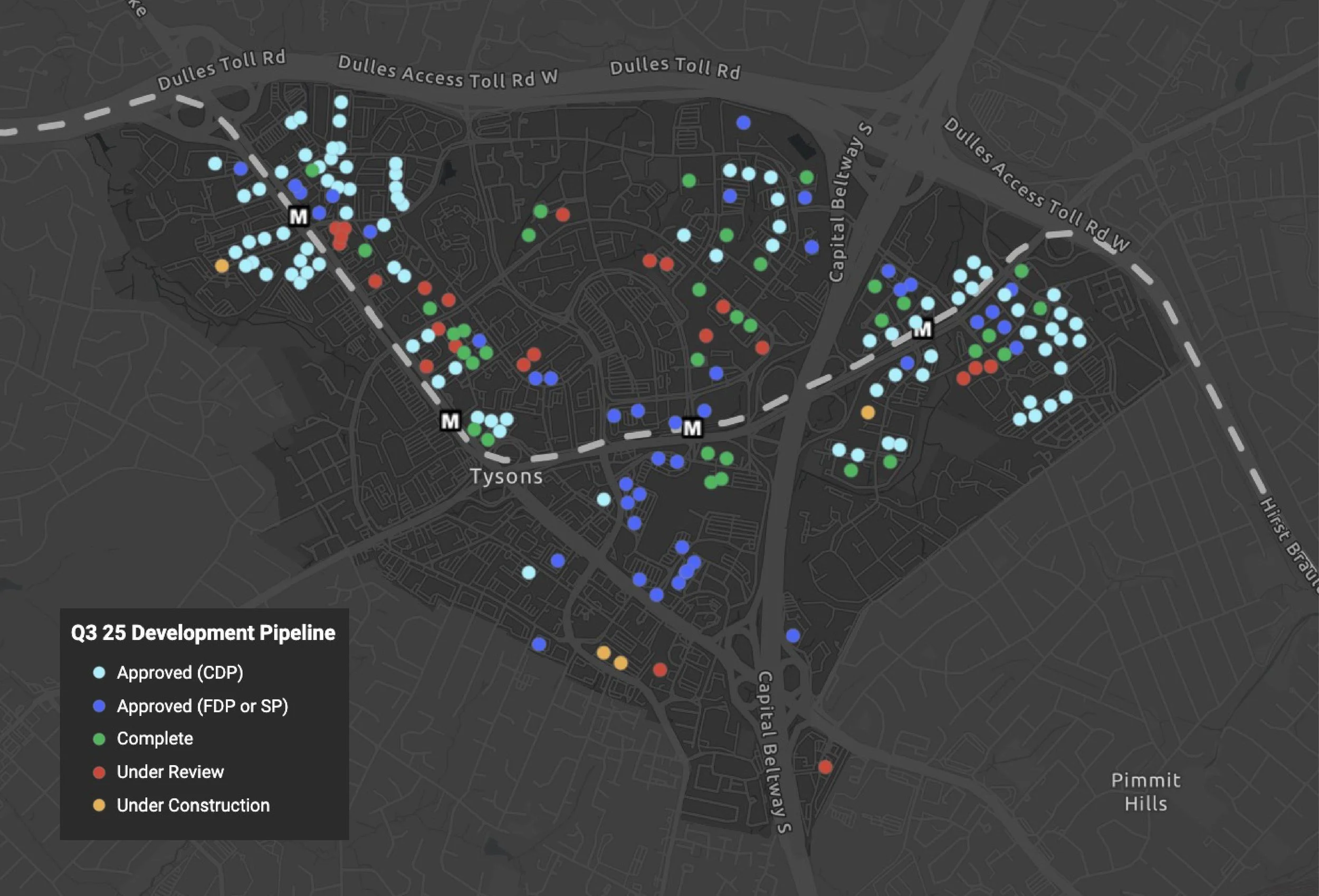
Tysons Development Pipeline map. The green dots on the map show completed projects, the orange dots show projects under construction, and the red, teal, and blue dots show projects that are still in the multi-year application process. (Tysons Alliance)
How temporary businesses can bring life to empty land
In 2019, Rofougaran’s beer garden had to move because the developer was ready to build. So he struck a new deal with another developer who had vacant land that is awaiting approvals. In 2024, we got to visit the new location, called Shipgarten, while in Tysons to help the local community association develop a new placemaking framework.
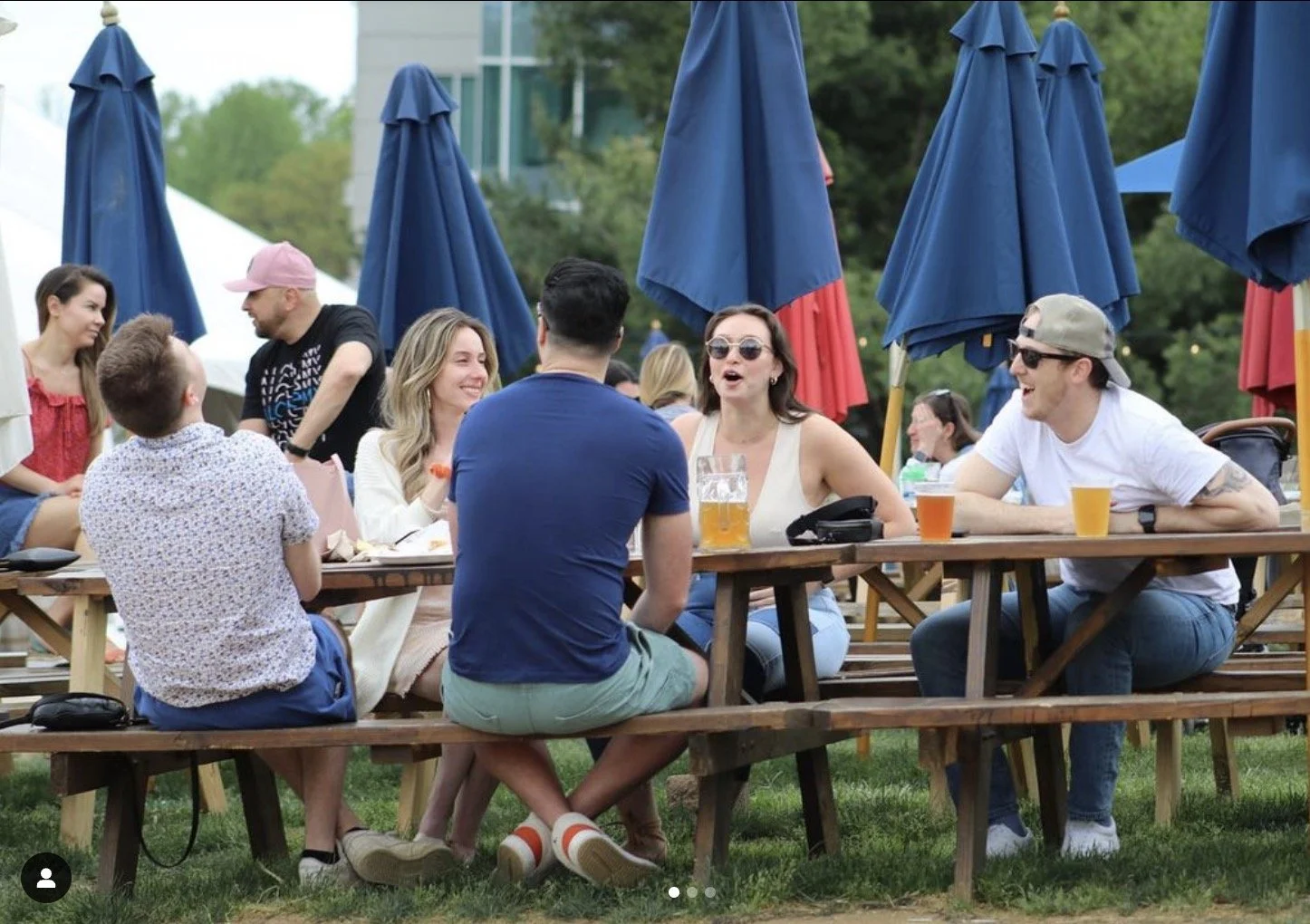
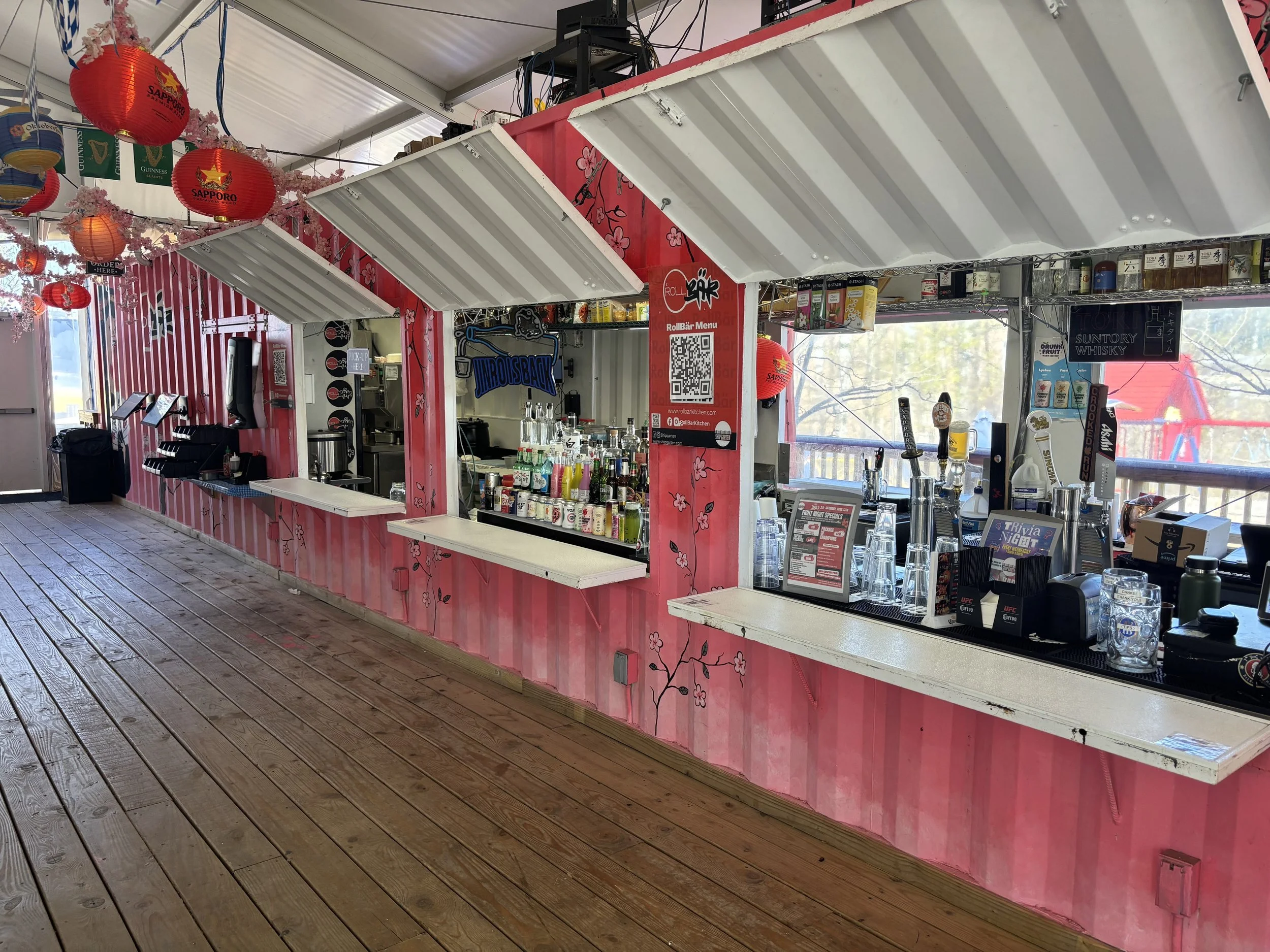
Shipgarten replaced an empty piece of grass with seven bars (in and outside tents), and four restaurants (in shipping containers). Instead of being a deadzone, the place is now full of people.
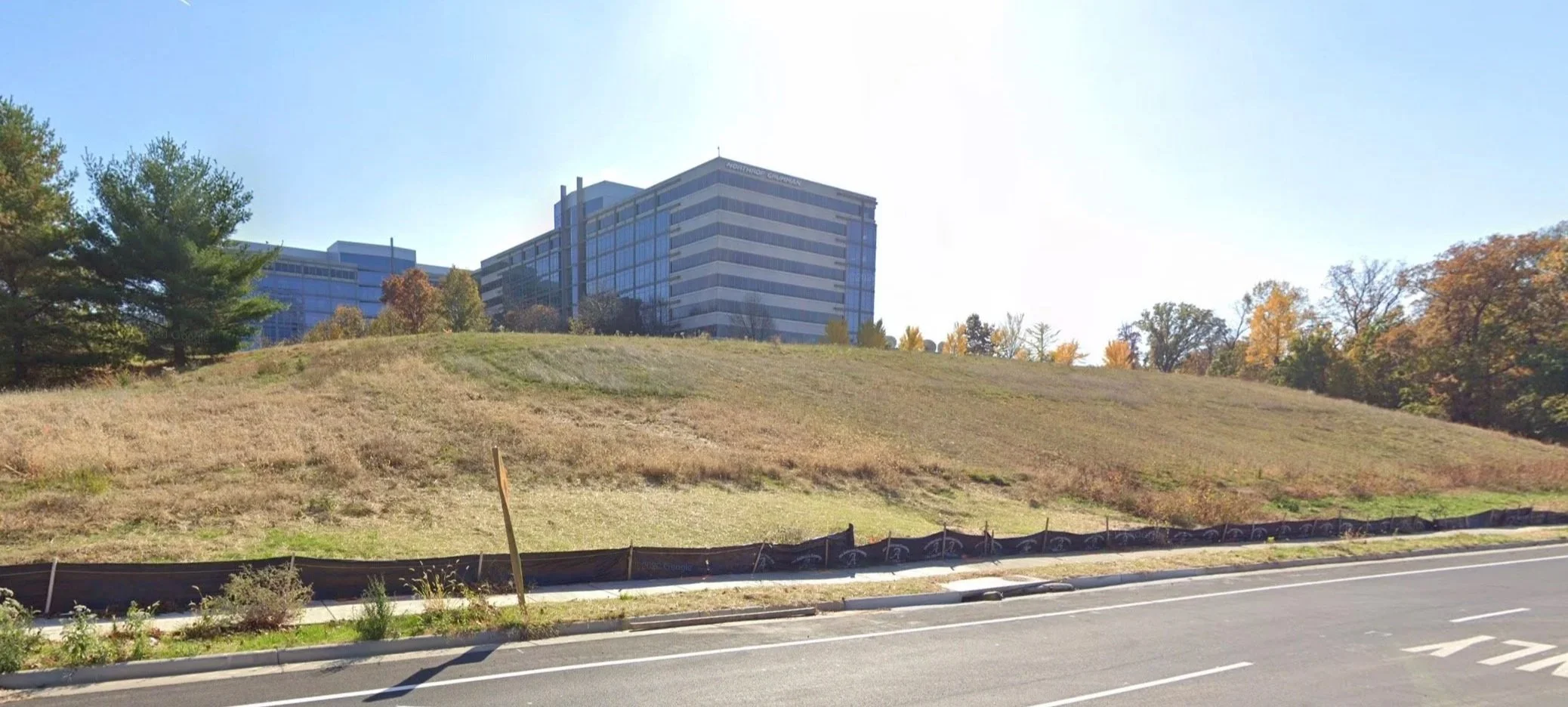
The vacant lot in Tysons, before transforming into a vibrant public gathering place. (Happy Cities)
Rofougaran’s goal was to create as many reasons to visit as possible. Each restaurant has a different theme: from Persian pizza to German-Bavarian-American fusion. Outside, there are games like cornhole and a giant chessboard.
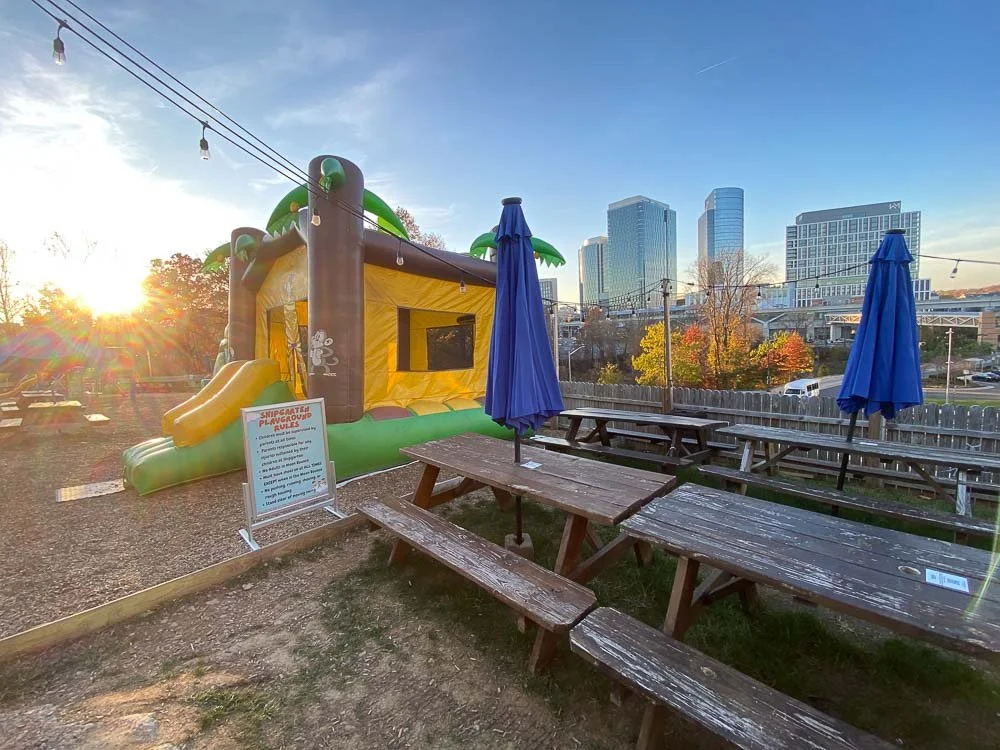
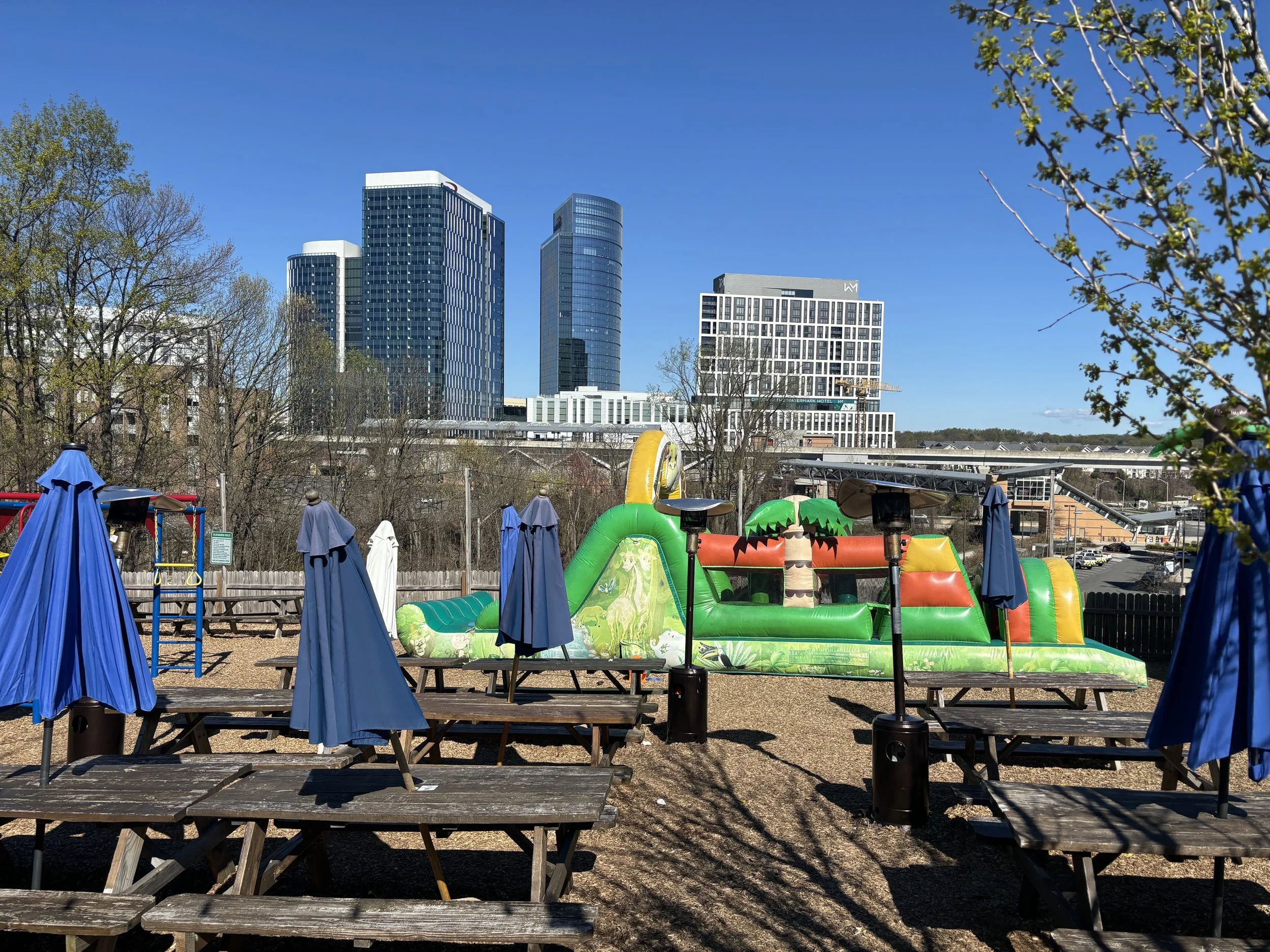
Bouncy castle next to picnic tables. (Shipgarten)
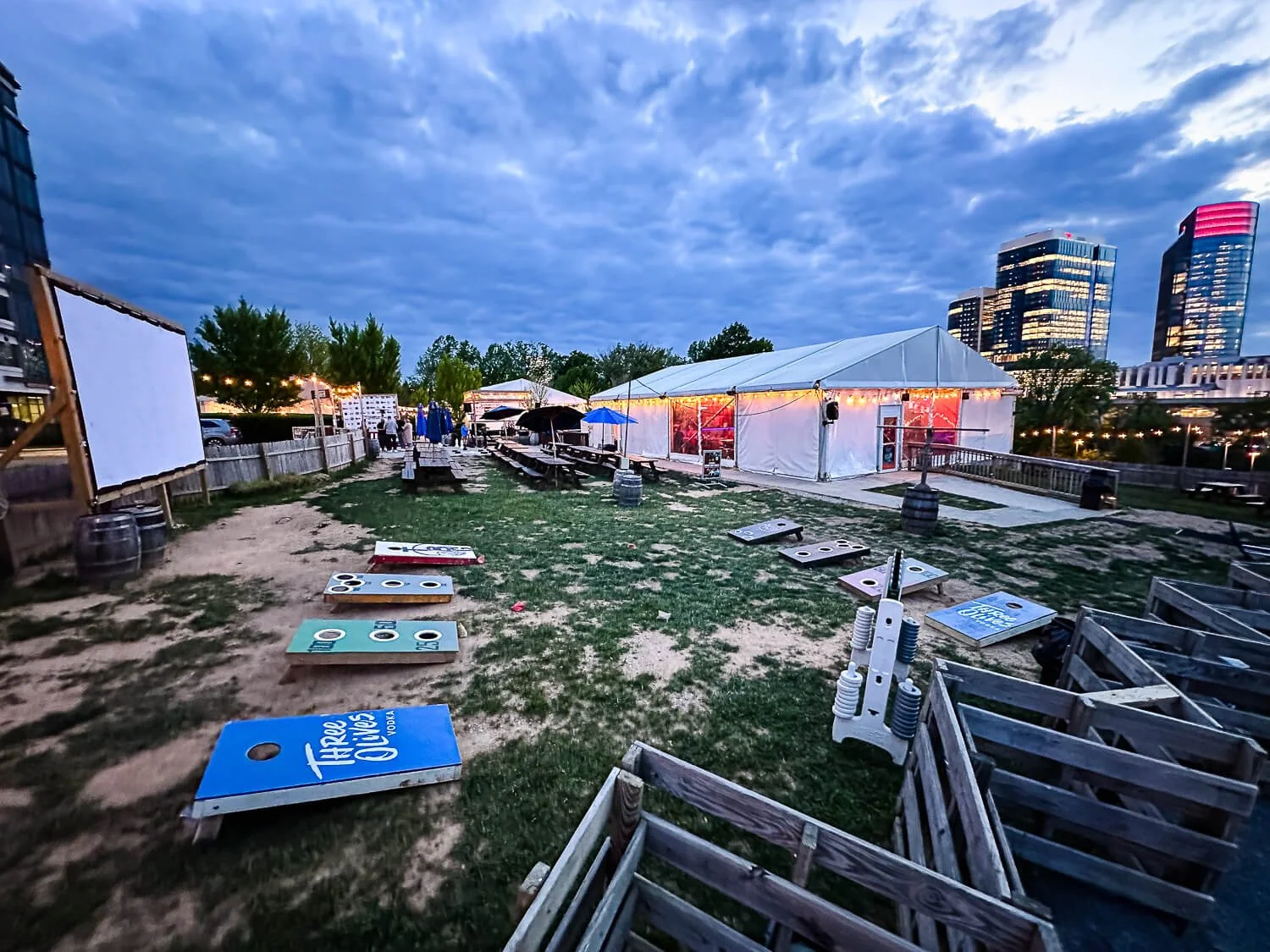
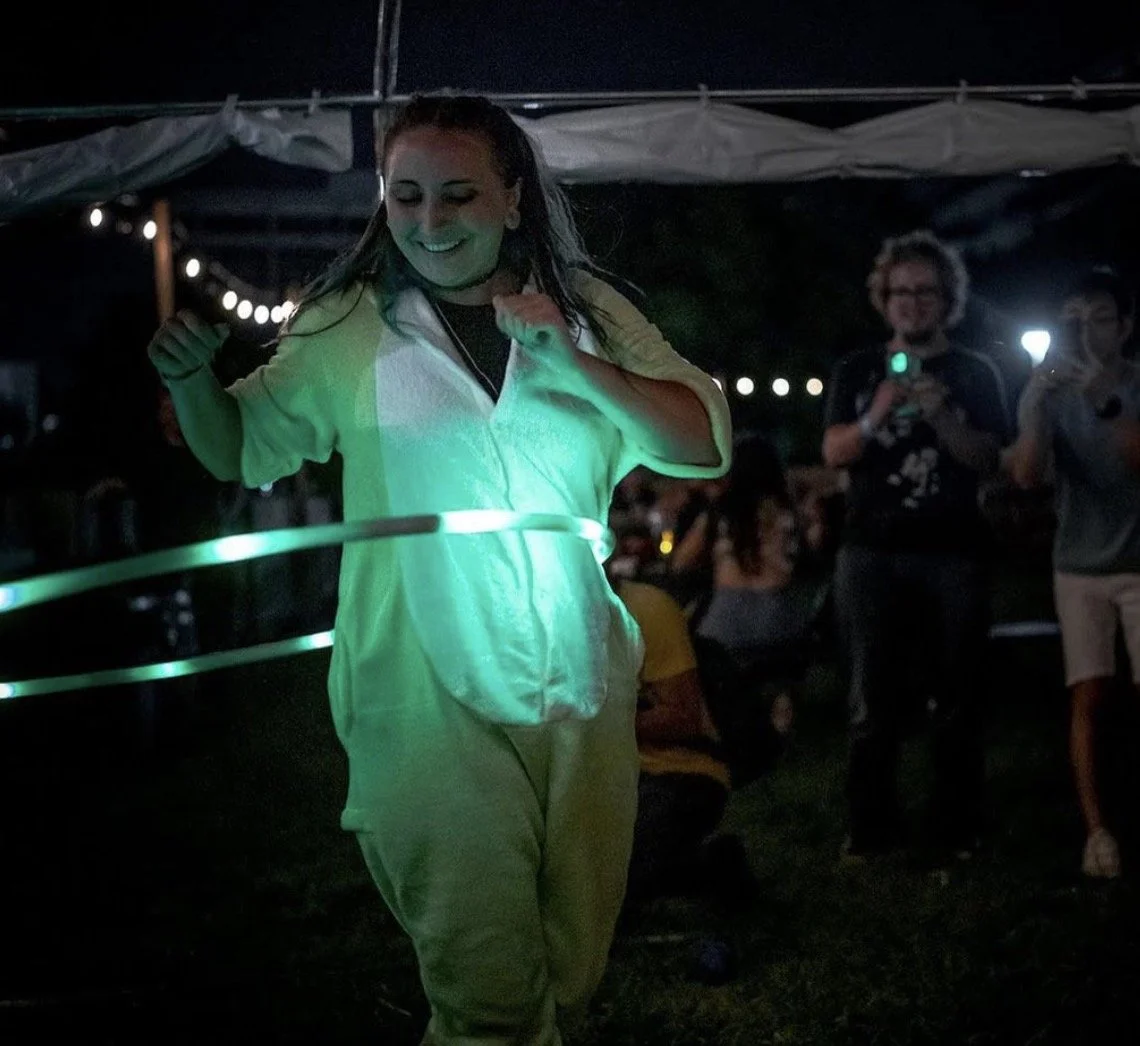
Outdoor space for games, screenings, and activities. (Shipgarten)
Dogs are allowed everywhere. There’s a fenced-in dog park and even a dog food menu. For kids, it has a playground and two bouncy castles. Shipgarten is fenced in, so parents can enjoy a drink in peace while their kids play, without having to worry they will run into a road.
Shipgarten puts on music shows for adults, but they also hold regular events for kids, like petting zoos, magicians, superheroes, and an egg hunt at Easter.
“There’s been a great, great response from the community,” said Rofougaran.

Soon, Rofougaran plans to open more locations in nearby communities, including Reston, another suburban office district undergoing a similar transformation.
In most cities, most of the time, this land would have stayed a dead space, keeping people away. Instead it has become one the main places where local residents and office workers can gather. The government also receives tax revenue from a plot that would otherwise generate little. And crucially, the business sends the signal that Tysons is a place where people want to be.
How to enable temporary uses that support public life
Often, cities focus on major, long-term projects when they try to encourage change. But initiatives like Shipgarten show that temporary uses can be just as effective. More than that, they help reduce the risk that vacant lots pose to major redevelopment projects. By bringing vibrancy today, they communicate that a place is worth investing in for the long run.
However, many cities are still learning how to regulate temporary uses. As a food and beverage retail space, Shipgarten had to be approved through the rezoning process for the site, and needed a site plan and building permits. It was the first time the county had seen shipping containers proposed for a public gathering place, according to local planners. The building code also doesn’t differentiate between interim and temporary uses, meaning that Shipgarten had to follow code for permanent structures. But the County’s planning team hopes that the process will be smoother for future projects.
“We were able to get to a place where the shipping containers can be relocated without needing to go through such an extensive approval process next time,” wrote a Fairfax County representative in an email. “It was a learning process for all involved with the goal being that for future interim uses, the process is more streamlined.”
Other cities have discovered the value of temporary projects. Halifax turned the site of a future hospital into a community garden for seven years. Montreal regularly builds temporary public spaces on vacant lots, including a community garden and a minigolf course on the site of future social housing. Vancouver piloted a program to build modular housing on land awaiting redevelopment. A program in Australia allows artists to use vacant buildings as temporary storefronts and studios.
These uses are temporary, but they can create permanent change. They support the economic conditions for human-scaled development, helping communities achieve ambitious goals around local business, social connection, and walkability. And they open opportunities for people like Matt—who found his passion and livelihood in making his community a better place to live.
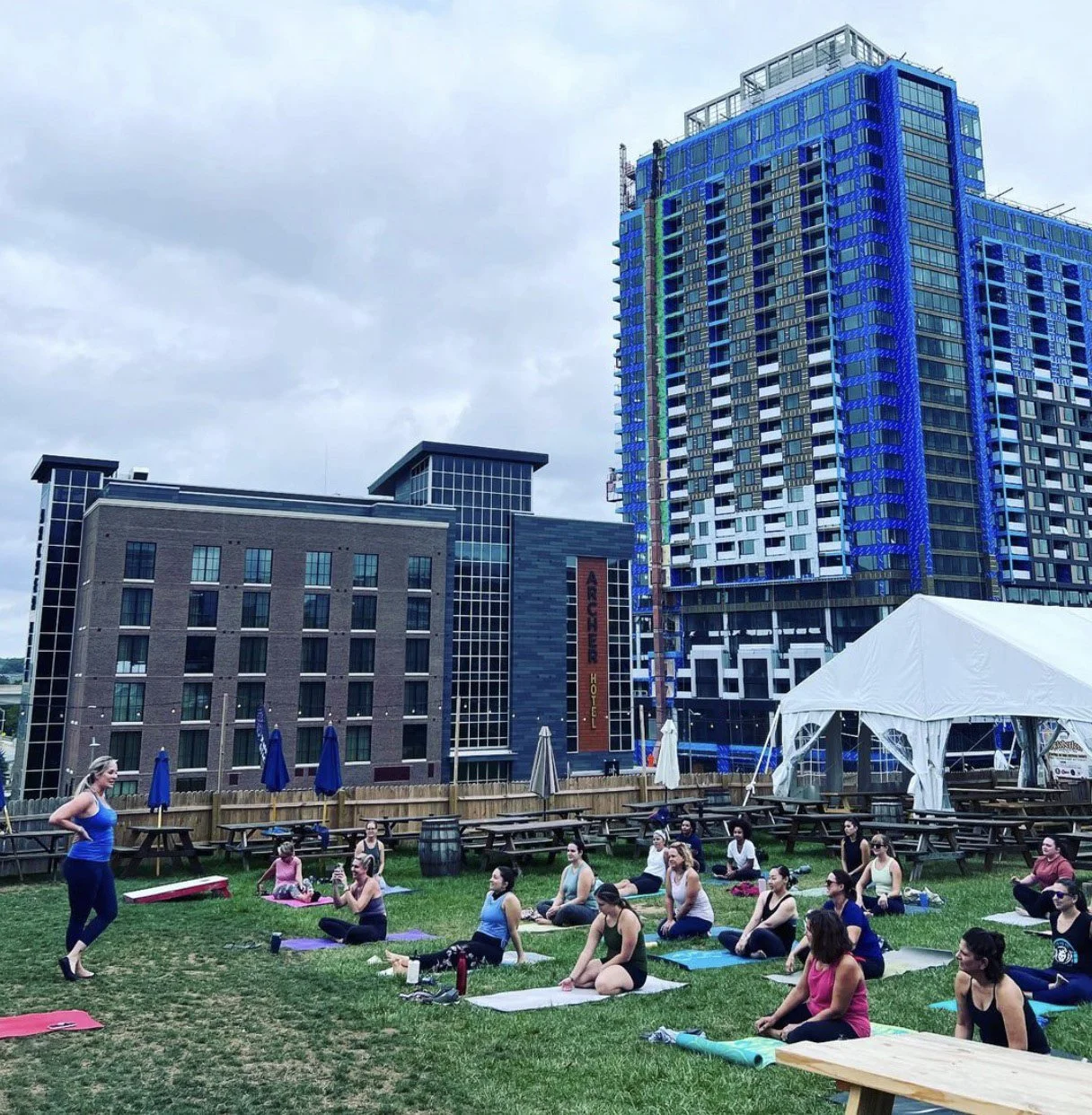
Yoga on a formerly vacant lot. (Shipgarten on Instagram)
