Dear friends,
Can buildings make people healthier and happier?
In 2010, New York City published a groundbreaking set of design guidelines to promote healthier buildings. The policy encouraged designers to do sensible things like locate buildings near transit and parks, make stairways more prominent and inviting, activate building edges with entrances, awnings, and detail—and much more.
In one of these "Active Design" buildings, called Arbor House, researchers followed resident experiences. Arbor House is entirely affordable housing, with a rooftop community food garden, an outdoor active plaza, and a large indoor gym. Some of their findings? People living at Arbor House took the stairs more often and reported higher feelings of safety and health after just one year of living there.
The research reinforces a central belief: Building design shapes how humans move through their environment, including how physically active people are.
Collecting the data for healthier buildings
As cities across North America densify, planners face a critical question: How can we ensure that new buildings support wellbeing for residents?
Post-occupancy studies help uncover which specific design features have the biggest impact. Planners can then use this data to shape city policies. This data also helps architects and designers understand what features are worth fighting for, versus what could be cut to save costs.
More recently, we've been exploring how design features that connect people to nature can improve user experiences, satisfaction, and wellbeing both at home and and work.
In Kelowna, B.C., we surveyed employees about their perceptions of natural light, plants, exposed wood surfaces, and other natural features in a new office building. Although a small study, natural light and exposed wood emerged as the two design features employees were most satisfied with—and were also correlated with greater at-work experiences.
We've included a snapshot of some other wellbeing findings below. To explore all the results, you can check out the case study on our website.
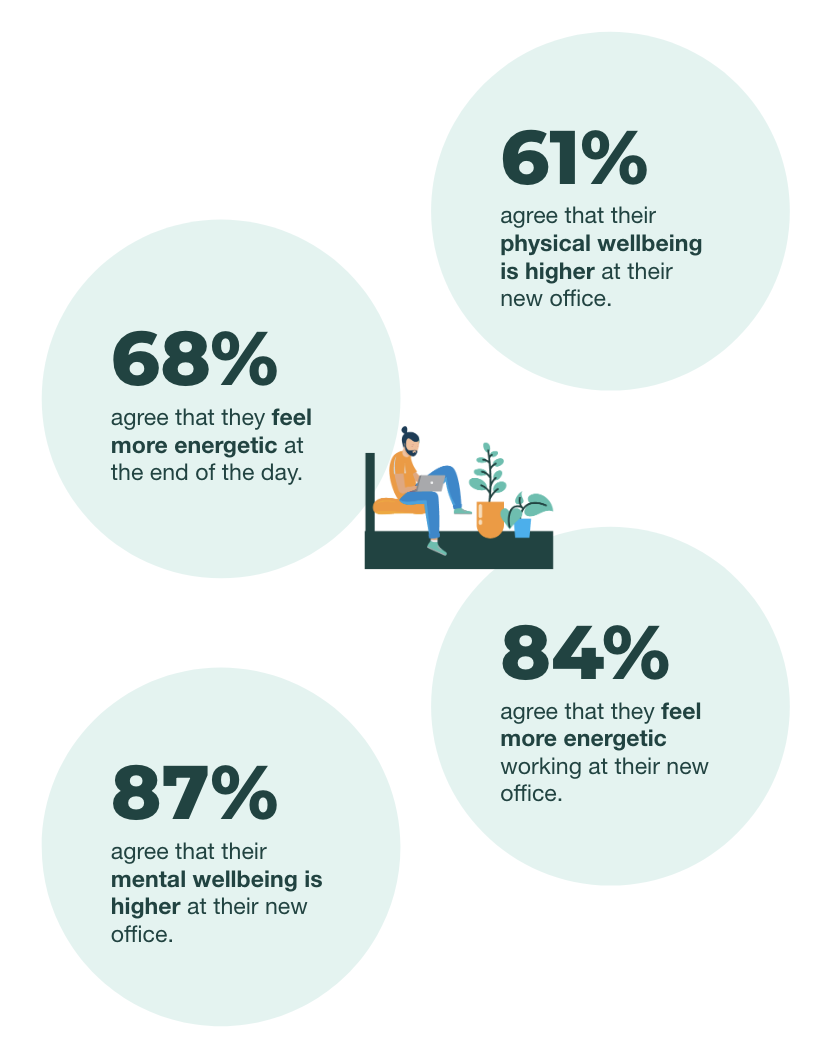
Snapshot of survey results from a post-occupancy study of the Exchange, a mass timber office building in Kelowna. (Happy Cities_
Learn how to craft policy for happier, healthier homes
Join our team in an upcoming webinar with local leaders in happier, healthier housing! Hear from the City of Port Moody about how incentive-based policies can encourage developers to build more socially connected homes, and learn how Burnaby and New Westminster are conducting their own research to shape city policy.
Join us on June 24 at 9:30 a.m. PT to learn more.
What we're reading (and listening to)
Fostering inclusion for people with dementia. From the City of Victoria.
Bogota's next big urban innovation: Equity for working women. From Planetizen.
How Cardiff bike lanes are doing more with less. From Bloomberg CityLab.
See Vancouver's Sen̓áḵw towers, from the inside out. From the Vancouver Sun.
In defence of saying 'hello.' From Time Magazine.
Happiness researchers take your burning questions. From CBC Radio.
And... we recently joined the Globe and Mail's Happy Enough podcast to chat about what the world's happiest cities have in common. Give it a listen 🎧
Are you working on an innovative building that you think is worth studying?
Send us a reply to let us know why, and what health outcomes you hope to measure. Maybe we can help 👀
Thanks for reading,
Emma from Happy Cities
Received this email from a friend and want to subscribe? Join our mailing list below.