Can splashes of paint and street furniture increase laughter?
Dear friends,
How do you know if a public space is working?
It sounds unscientific but it often comes down to a feeling: Is this a place where you'd want to meet friends? Would you feel comfortable alone here? Do you feel like you belong in the space?
Humans are emotional. We know, intuitively, the kinds of places that make us feel good. But when it comes to actually implementing changes to make public space more joyful and rewarding to spend time in, there's a gap: Funders and council want hard numbers. Closing a street to cars feels politically risky unless you can prove the social benefits.
So we designed a tool that could quantify these feelings and translate people's experience into clear metrics that show the success of the space.
We call it the Public Life Study.
Measuring joy and trust along Bank Street, Ottawa
Last summer, Ottawa transformed three blocks off of a busy main street into temporary plazas.
Staff wanted to measure the impact of these plazas on the neighbourhood, with goals to create a more inviting, safe, and vibrant public realm.
Through surveys and observations at the site (both before and after building the plazas), they measured the intangible: joy, chance encounters, belonging. They observed 43 people laughing at the new plazas, compared to zero people before the transformation. Visitors were 25 per cent more likely to agree that a stranger would return their wallet if they lost it.
“[The data] showed that not only did people's relationship with space change, but that their openness and trust with others also increased,” said Ezra Lipton, a planner at the City of Ottawa.
Equipped with this data, the program will return this summer, expanding to more locations along Bank Street.
By attracting more visitors to the street, the City found that the plazas also helped bring more customers to local businesses. In other words, places that make people happier tend to be economically successful, too. Who can say no to that?
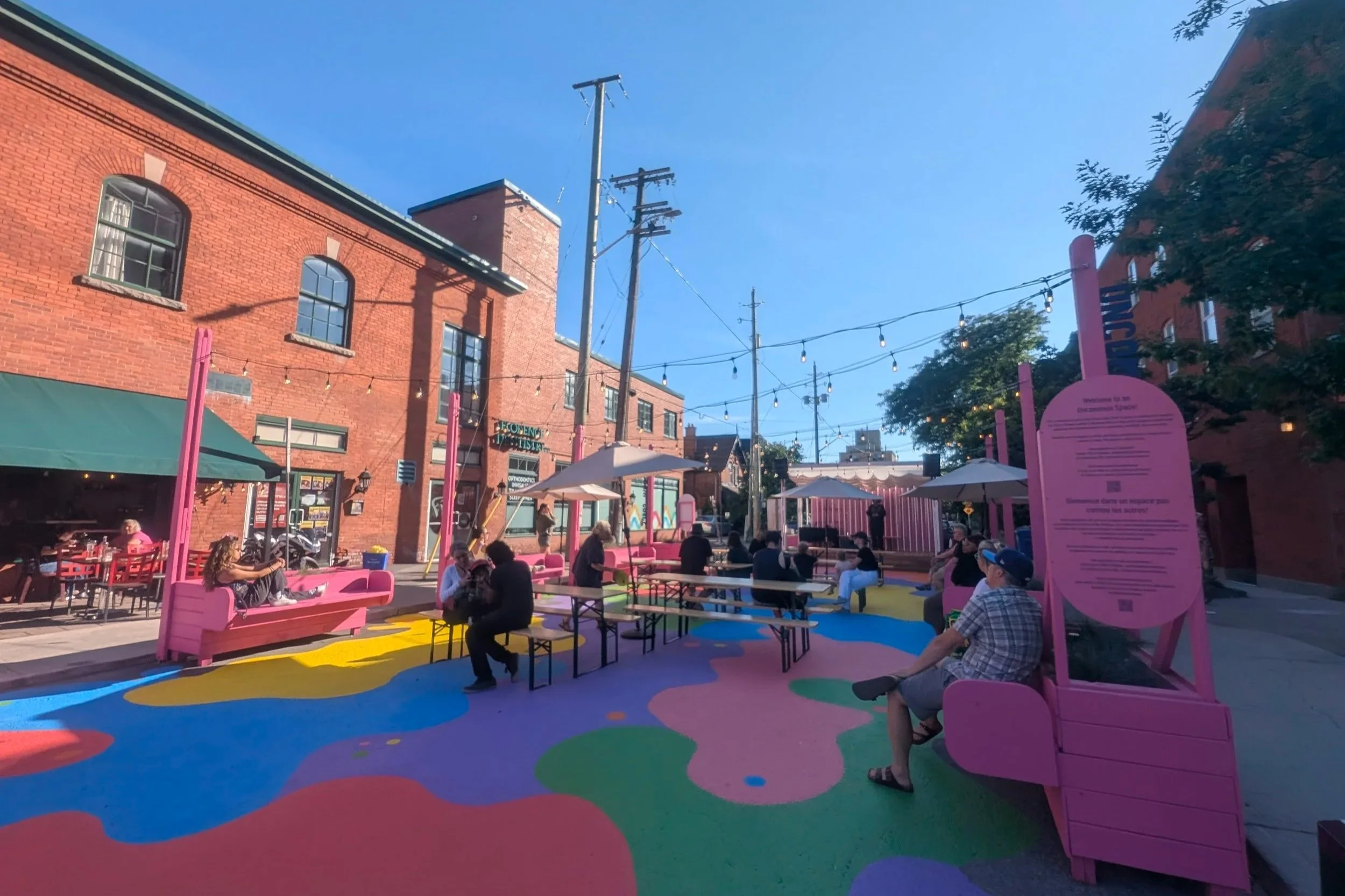
An “Uncommon Space” plaza during summer 2025, transformed through the Street Seats Pilot Program. (City of Ottawa)
Planning a placemaking project?
Whether you're a community organizer or city planner, it's the season to start collecting data for your summer project!
From small street furniture and murals, to large-scale events and public space transformations, the Public Life Study tool can help you measure impact and communicate success to the people who pull the purse strings: funders, city councils, or even local businesses. So... what are you waiting for?
What we're reading
East Vancouver students get to school on 'bike bus.' From Global News.
Mapping community resources and care in the Hastings-Sunrise neighbourhood. From East Café Chronicles.
Parks that work for teenage girls. From Make Space York.
A little library for dog sticks. From the Tyee.
What happened to hanging out in the street? From Bloomberg Citylab.
Bringing colour and connection to Kamloops: How public art came to be. From the Wren.
How a beer garden is transforming vacant land in Tysons, VA. From Strong Towns.
How does your neighbourhood or city transform itself during the summer months? Send us a note or even a photo 🌷
Thanks for reading,
Emma from Happy Cities
Received this email from a friend and want to subscribe? Join our mailing list below.