
Homes and spaces that connect people
Measure the social performance of buildings and shared spaces—and unlock the policy and design tools to strengthen community wellbeing.
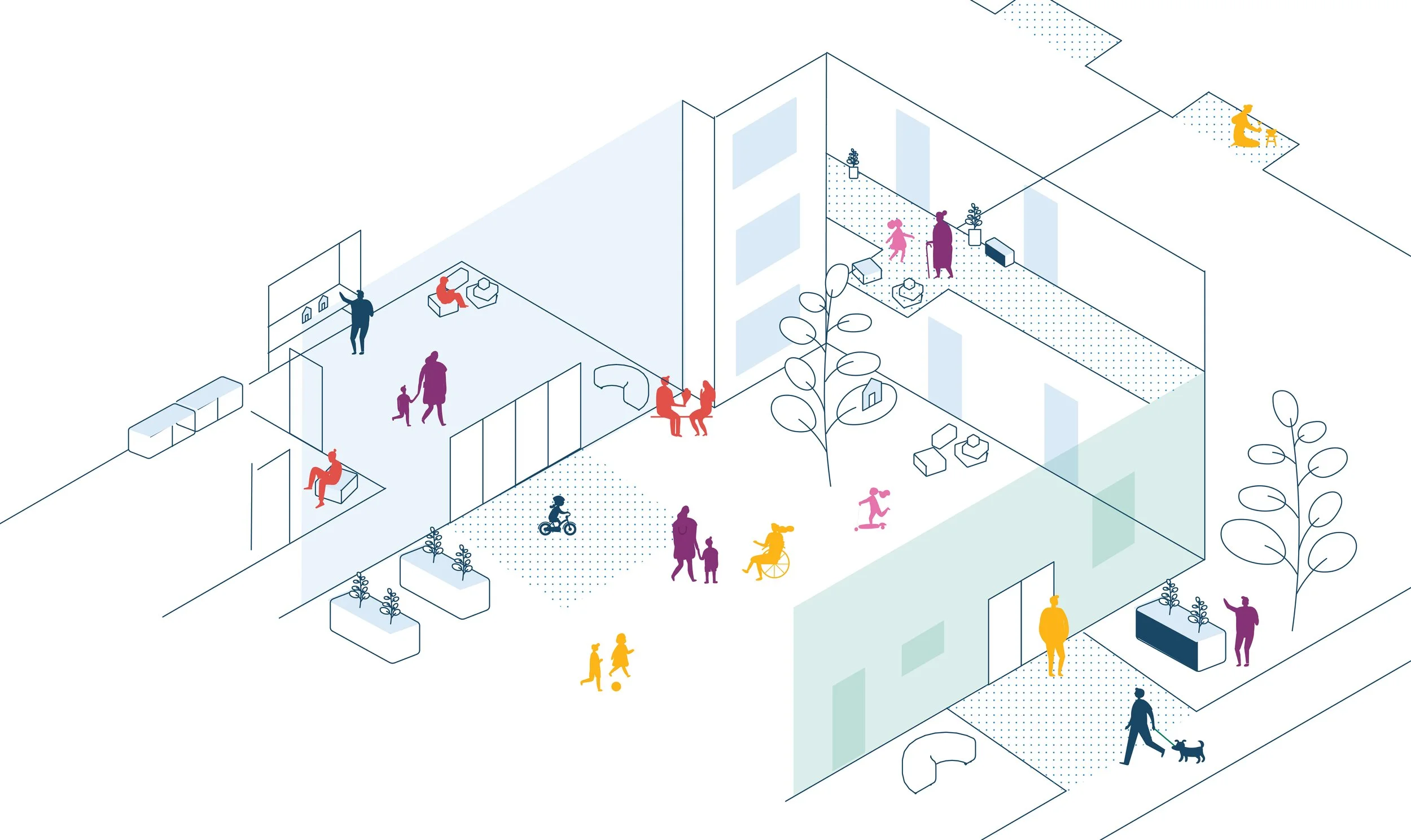
Cities face pressure to build more homes—and faster. Too often, residents and elected officials fear that density will worsen social isolation and quality of life.
Our research shows the opposite: Apartments and missing middle homes can support healthy, connected growth—what matters is how we design them.
How can new development strengthen social connection and health?
Housing is critical social and wellbeing infrastructure. We offer evidence-based design strategies, research services, and policy tools—drawing on over 15 years of research to:
Measure the social performance of homes, buildings, and shared spaces
Craft design guidelines for multi-unit housing communities that support neighbourly connections, trust, and resilience
Conduct technical reviews for liveable, accessible, and age- and family-friendly homes
Identify the most effective policy tools to support social connection and wellbeing in multi-unit housing—without hurting affordability
Who we work with
Our services are tailored for:
Growing municipalities that need practical ways to ensure new growth supports community health and connection
Mixed-use developers who care about building community
Non-profit housing providers committed to supporting resident wellbeing
Architects and developers seeking data to understand how users experience buildings and spaces
Funders seeking to measure the impact of their programs
Our services
-
Our policy evaluation framework helps municipalities assess how social wellbeing fits into current plans and strategies, including:
Detailed audit of all relevant policies to assess how social wellbeing is currently considered and identify relevant policy language (such as OCPs, development permit areas, design guidelines, housing strategies, neighbourhood plans, and age- or -family-friendly strategies)
Review of in-stream development applications to assess how proposed projects consider community wellbeing, level of alignment with policy goals, and uptake of relevant development incentives
Engagement with developers, architects, non-profit housing providers, and funders to understand how current policy aligns with industry realities
Cross-departmental workshops or focused working sessions to align on priorities and discuss challenges
Through this process, our team works with your staff to:
Identify strengths, challenges, and opportunities to your jurisdiction’s current approach to wellbeing policy
Develop a roadmap and recommendations on policy mechanisms or updates that can be leveraged to strengthen social wellbeing in your jurisdiction
-
We work with municipalities to craft actionable policies that harness the most effective strategies for enabling housing that strengthens community wellbeing and affordability. Our team helps municipalities:
Establish shared goals, intentions, and outcomes for new policy, including workshops to build alignment across city departments
Engage residents and industry actors to understand community experiences and priorities
Conduct technical testing to see how proposed policy changes would impact current or recent development applications
Identify the most effective policy tools to support social wellbeing, whether a dedicated new policy and set of design guidelines, or updates to existing documents
Identify incentives and levers to encourage sociable design—without hurting affordability and financial viability
-
Our proprietary assessment tools help municipalities, developers, and funders maximize social connection, inclusion, and overall wellbeing in development applications. We offer:
Community wellbeing audits: Track 80+ metrics for social wellbeing for master-planned communities
Accessibility audits: Review of development applications led by RHFAC professionals, assessing alignment with municipal policy, provincial requirements, Rick Hansen Foundation standards, and inclusive design best practices
Happy homes audits: Review of architectural drawings to identify design strengths and opportunities to support connection, health, and happiness in multi-unit housing
Following each audit, your team receives clear, practical recommendations to improve accessibility and and wellbeing, and a report summarizing project strengths that can be attached in submissions to Council.
-
Post-occupancy evaluations collect qualitative and quantitative data to create a clear picture of how a building or space is working—and for whom.
We offer academically validated and customizeable approaches to help cities, developers, and architects:
Measure wellbeing in homes and community facilities, including social connection, belonging, resilience, inclusion, safety, and more
Compare user experiences in new homes to prior or existing buildings, to understand the impact of housing design and policy on social wellbeing
Develop design recommendations for future social infrastructure projects
-
We help you maximize the value of your land for your community, offering analysis to identify a site’s highest and best uses, efficient and buildable layouts, and financial feasibility of proposed buildings. We develop site plans and offer design guidelines to maximize social connection for future residents and the wider community.
40+
buildings studied
73+
28+
public life studies
design audits
Global experts on design for social connection
Our team has studied buildings and public spaces around the world—from Canada, to Mexico, the Netherlands, India, the UAE, and beyond—translating this evidence to help governments, housing providers, and developers create happier, more resilient places.
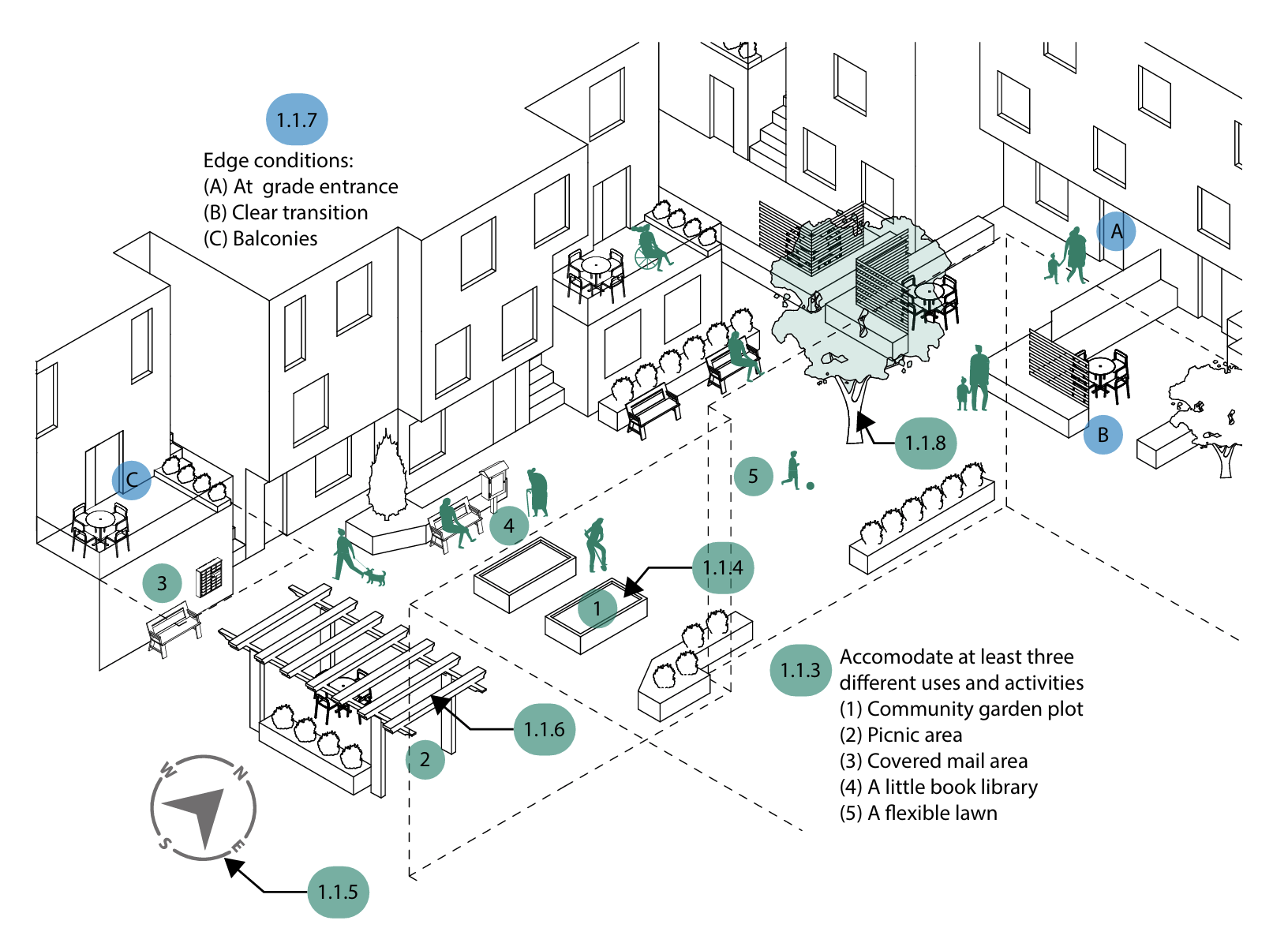
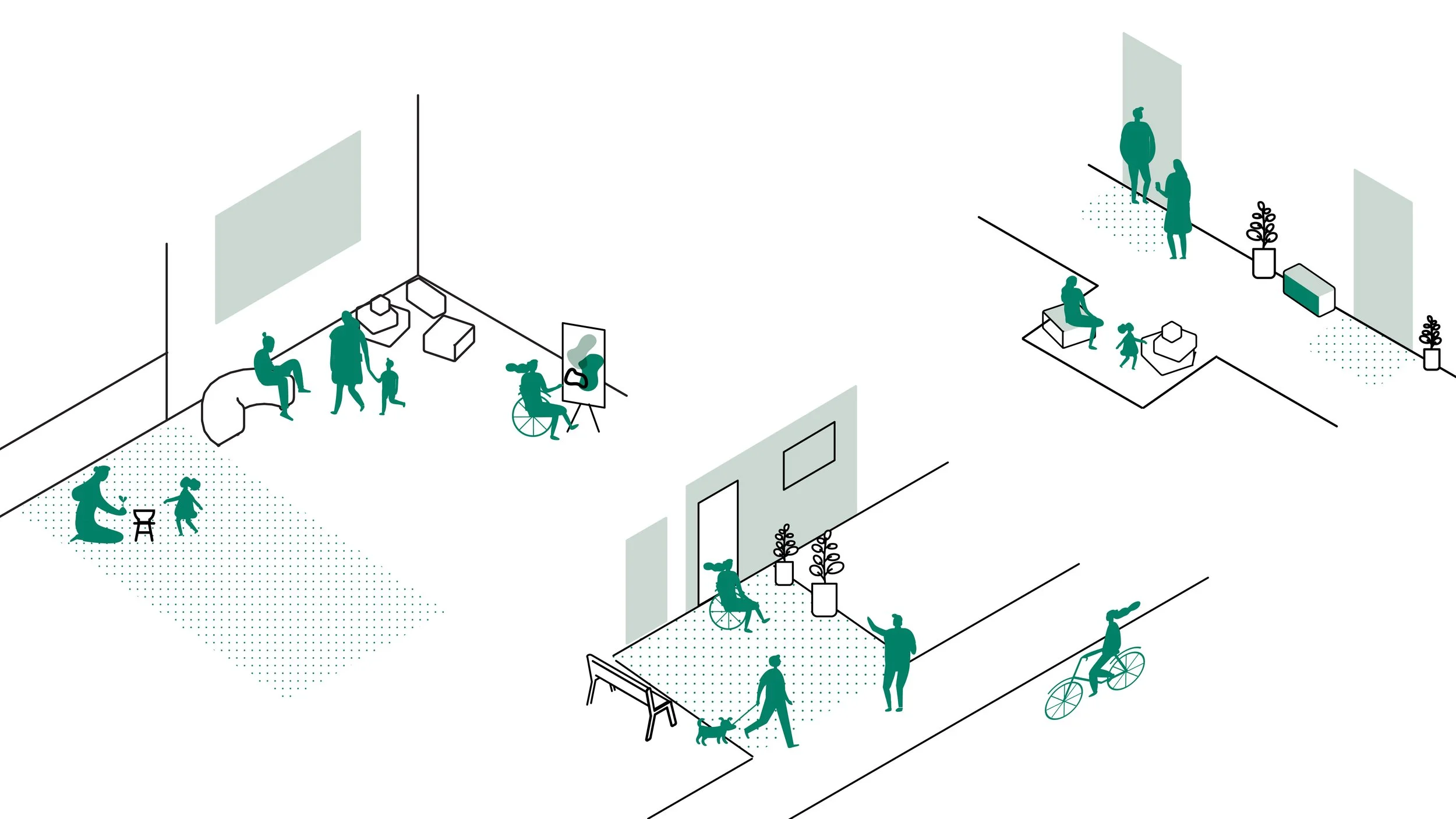
Diagram from the social wellbeing design guidelines, visualizing best practices for social courtyards and building edges. (Happy Cities / City of Port Moody)
Case study: Port Moody social wellbeing design guidelines
Development incentives to increase financial viability of socially connected homes
This incentive-based policy offers detailed design guidelines and criteria for supporting social connection and wellbeing in new multi-unit housing developments in Port Moody. The incentive-based approach allows flexibility for developers, offering financial incentives (such as floor area exclusions) to include social spaces, rather than adding more regulation. We worked with the City of Port Moody to develop:
Clear design guidelines to support wellbeing through a wide range of design opportunities, including courtyards, building entrances, circulations spaces, amenities, and parking
Technical testing and review of development applications to ensure viability
Guidance for family- and age-friendly homes, including layouts, sizes, interior design features, storage, and balconies
Explore more housing projects





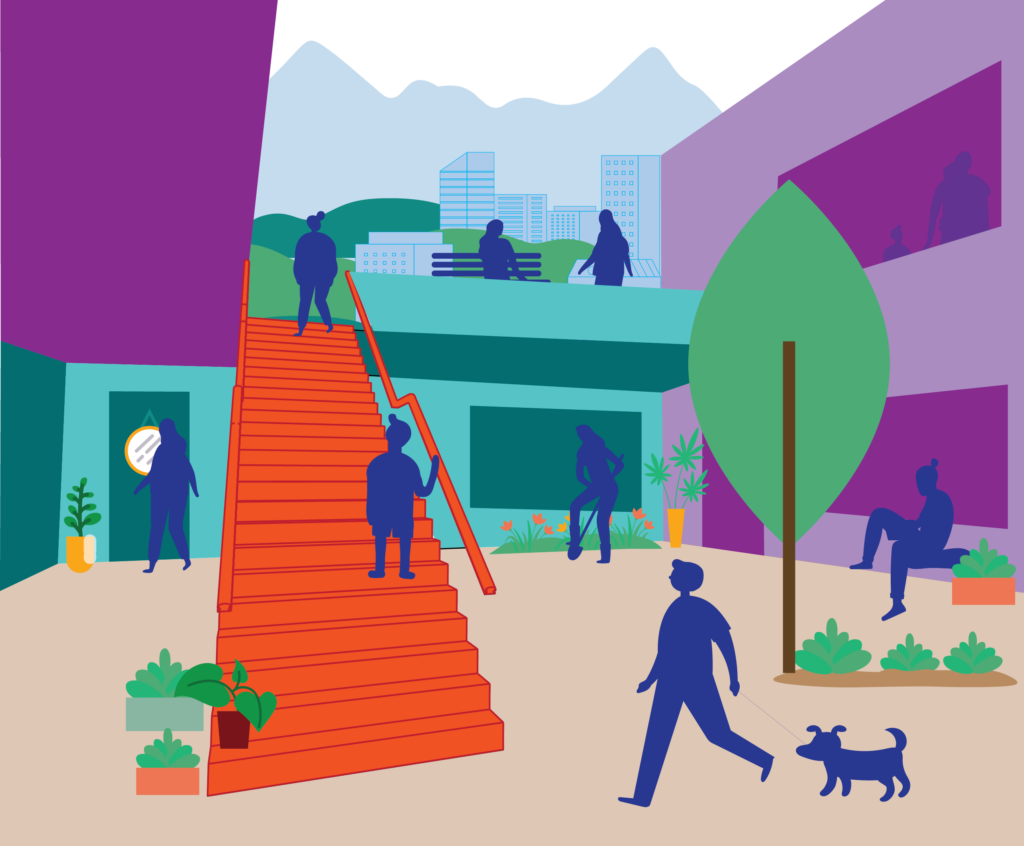


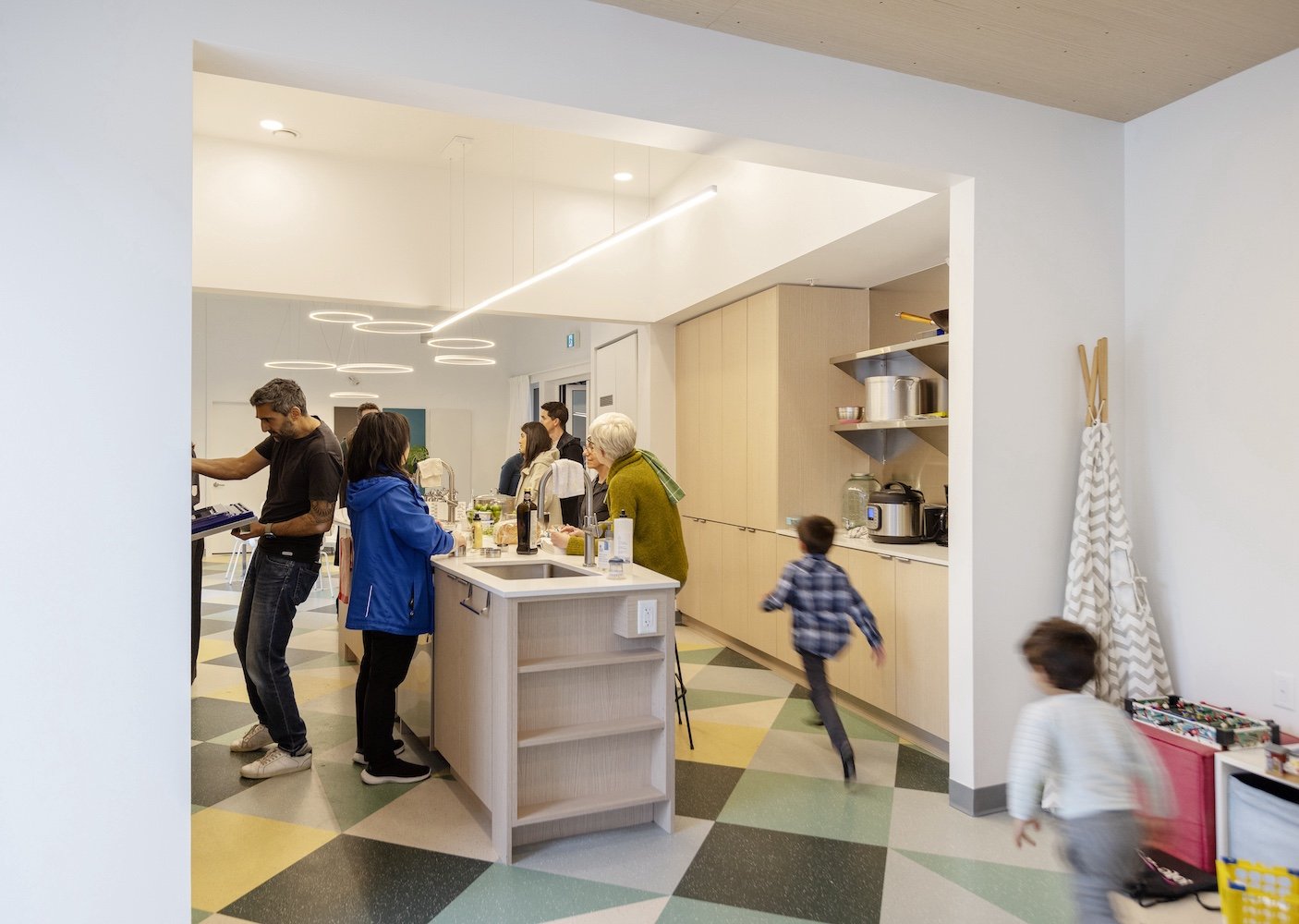
The common house at Our Urban Village, designed according to design principles for social wellbeing. (Tomo Spaces / Janis Nicolay Photography)
Resource: Building social connections
Toolkit of design actions to support social wellbeing in multi-unit housing
Happy Cities, Hey Neighbour Collective, and researchers from Simon Fraser University worked together with five local municipalities and one First Nation to co-create policy and design solutions to encourage sociable multi-unit housing design.
Building on the learnings from this project—and over a decade of prior research and engagement with housing industry actors—we published a design toolkit of evidence-based strategies to nurture social wellbeing multi-unit housing.