
Accessibility services
We work with all levels of government and the private sector to develop accessibility plans, conduct audits, and offer design guidance for inclusive, accessible spaces.
Accessibility and engagement services for governments and developers
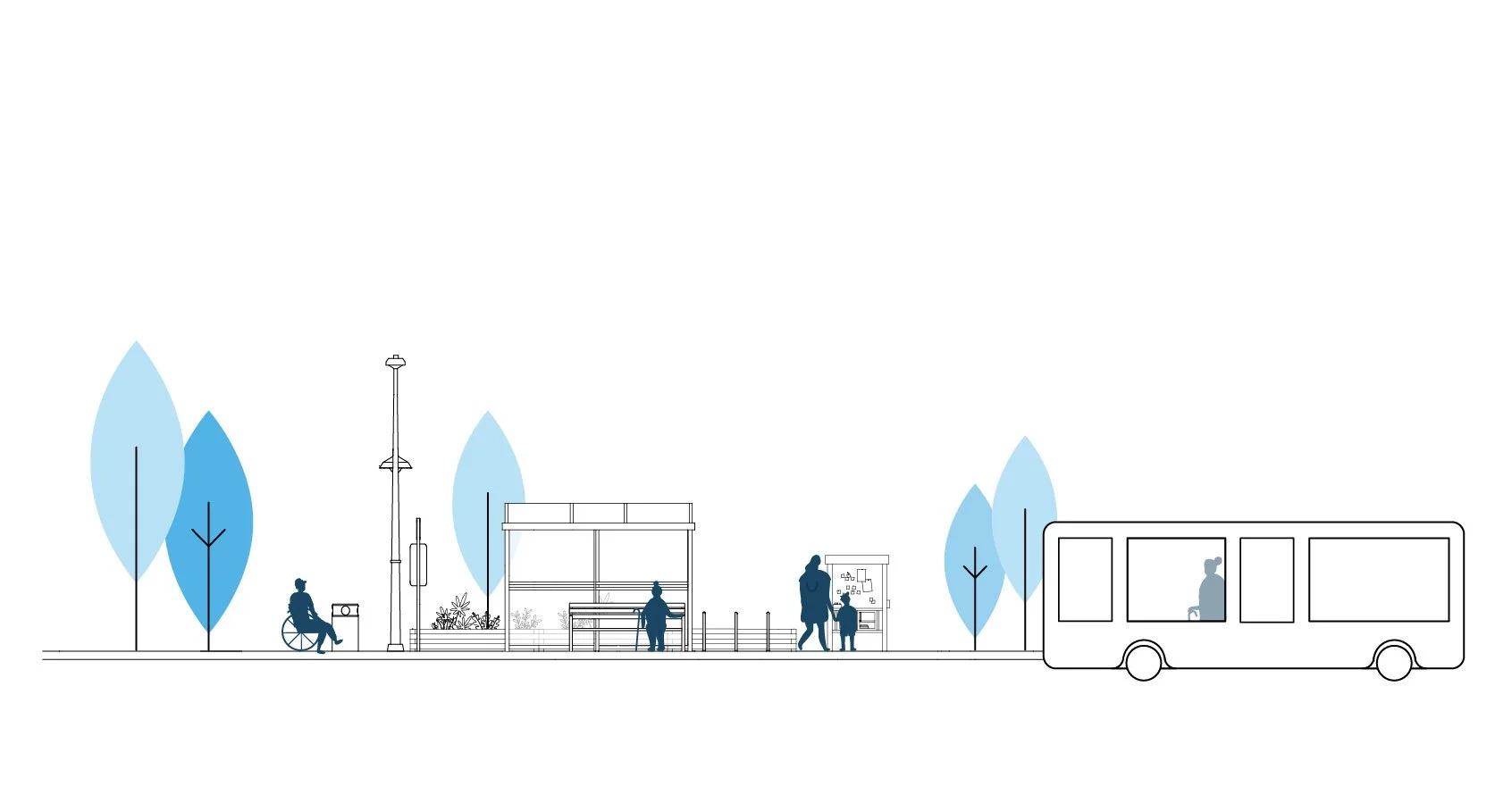
Happy cities are accessible cities. We help planners, designers, and policy makers identify and remove barriers so that spaces work better for everyone—including people with disabilities, older adults, families, and more.
Happy Cities, in partnership with Meaningful Access Consulting, brings extensive experience supporting municipalities and regional governments across British Columbia and Canada—to develop accessibility plans that are practical, education-focused, and built to be implemented. Together, we combine municipal policy expertise, inclusive engagement, and disability-led lived experience to help organizations move from intention to action.
Our team includes Rick Hansen Foundation Accessibility Certified professionals.
Our accessibility services
-
Together, Happy Cities and Meaningful Access Consulting have produced accessibility plans for municipalities across British Columbia and Canada, including Richmond, Kelowna, Regina, and more.
Our accessibility plans include:
Environmental scan and needs assessment
Community engagement strategy and delivery
Strategies and actions to improve accessibility, organized by service area (for example, employment, programs, built environment, transporation, procurement, and information and communications)
A screen-reader compatible plan document
Implementation roadmap, including level of priority, time frame, resources needed, and high-level cost estimates
Plain language, visual, large-print summaries, and/or other accessible communications materials to share the plan as needed
-
Our accessibility assessments measure access and inclusion in built spaces, including homes, community facilities, streets, and public spaces.
A typical scope includes:
Identifying relevant standards, requirements, and best practices—such as the building code, government legislation, municipal policy, Rick Hansen standards, and our in-house database of best practices for meaningful access
On-site accessibility assessment, conducted by Rick Hansen Foundation Accessibility Certified professionals
Detailed audit report, scoring all aspects of the built environment according to whether they meet some, all, or none of the identified best practices, policy requirements, and standards
Additional recommendations to support belonging and inclusion for diverse community members, drawing on Happy Cities’ expertise in desgn for social connection
-
A policy review provides your team with clear, actionable recommendations to strengthen access and inclusion for all community members. We have worked with municipalities of all sizes to review policy for paratransit, accessible transportation, snow and ice control, housing development, parks and recreation, and more.
A typical scope includes:
Detailed review of the relevant policy from an accessibility lens
Assessment of how the policy aligns with provincial/territorial and federal legislation
Cross-departmental workshop with city staff to build alignment on shared challenges, values, and opportunities—while working within practical realities
Site visit and assessment
Engagement with the disability community and key actors to better understand how policy shapes lived experience
Detailed report with clear, actionable recommendations on how to update policy, or direct updates to the policy itself
-
Our RHFAC professionals review proposed developments and detailed architectural drawings against accessibility standards, requirements, and best practices.
Accessibility audits include:
Assessing alignment of proposed design with municipal policy, provincial requirements, Rick Hansen Foundation standards, and inclusive design best practices
Clear, practical recommendations to improve accessibility and and wellbeing
Detailed report summarizing project strengths that can be attached in submissions to Council
-
We lead engagement with the disability community and key actors for a wide range of projects, including municipal accessibility plans, on-demand transit services, and provincial legislation.
Our engagement tools include:
Surveys and quantitative data analysis
Focus groups and interviews to hear in-depth, qualitative feedback
Community pop-up events to meet people where they are
Walking/rolling tours to see first-hand experiences
Workshops and collaborative, co-design sessions
Facilitation of formal community advisory groups
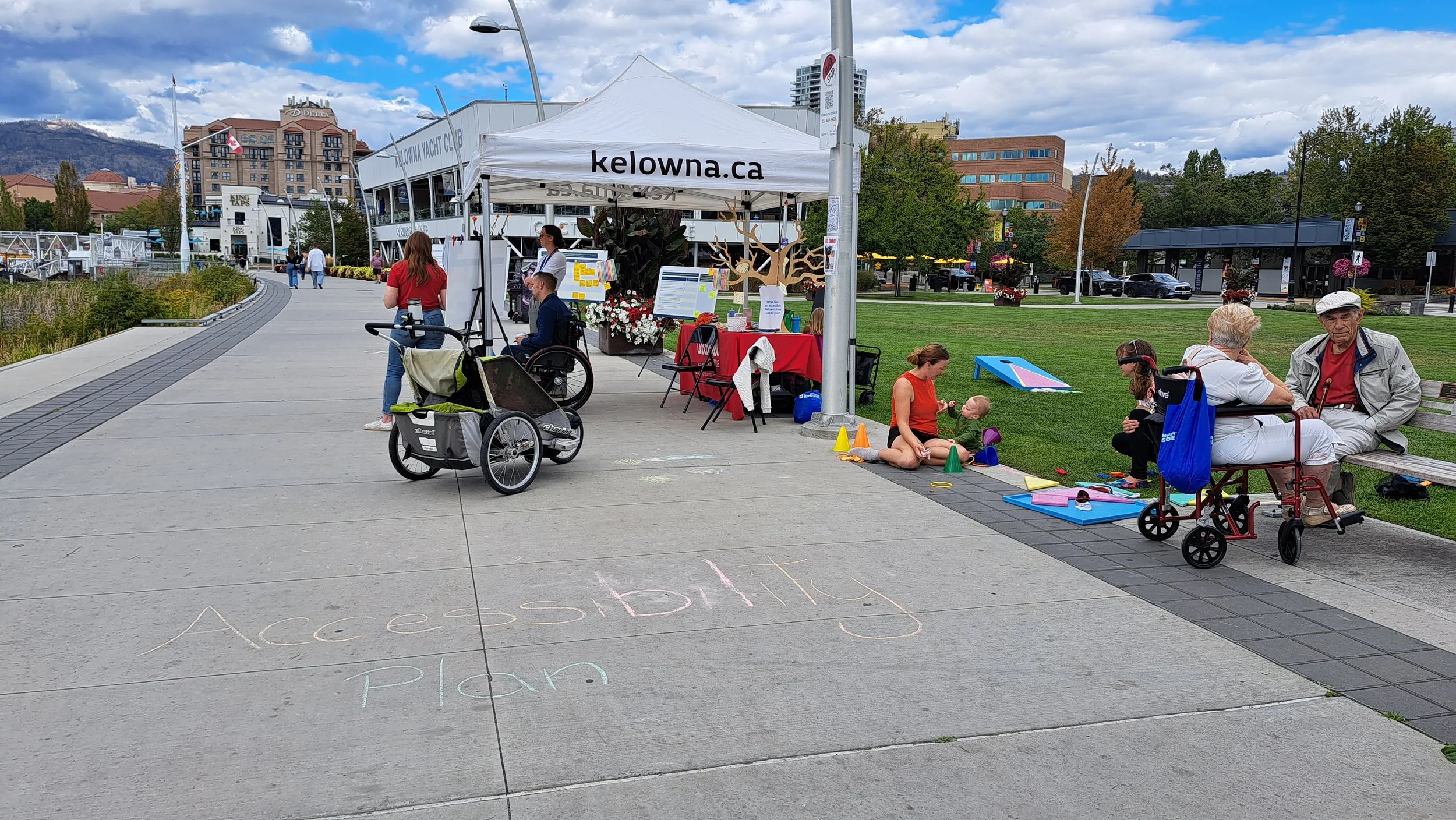
Community pop-up event in Kelowna, B.C., to inform the city’s accessibility plan. (Happy Cities)
Explore our accessibility plans and design audits


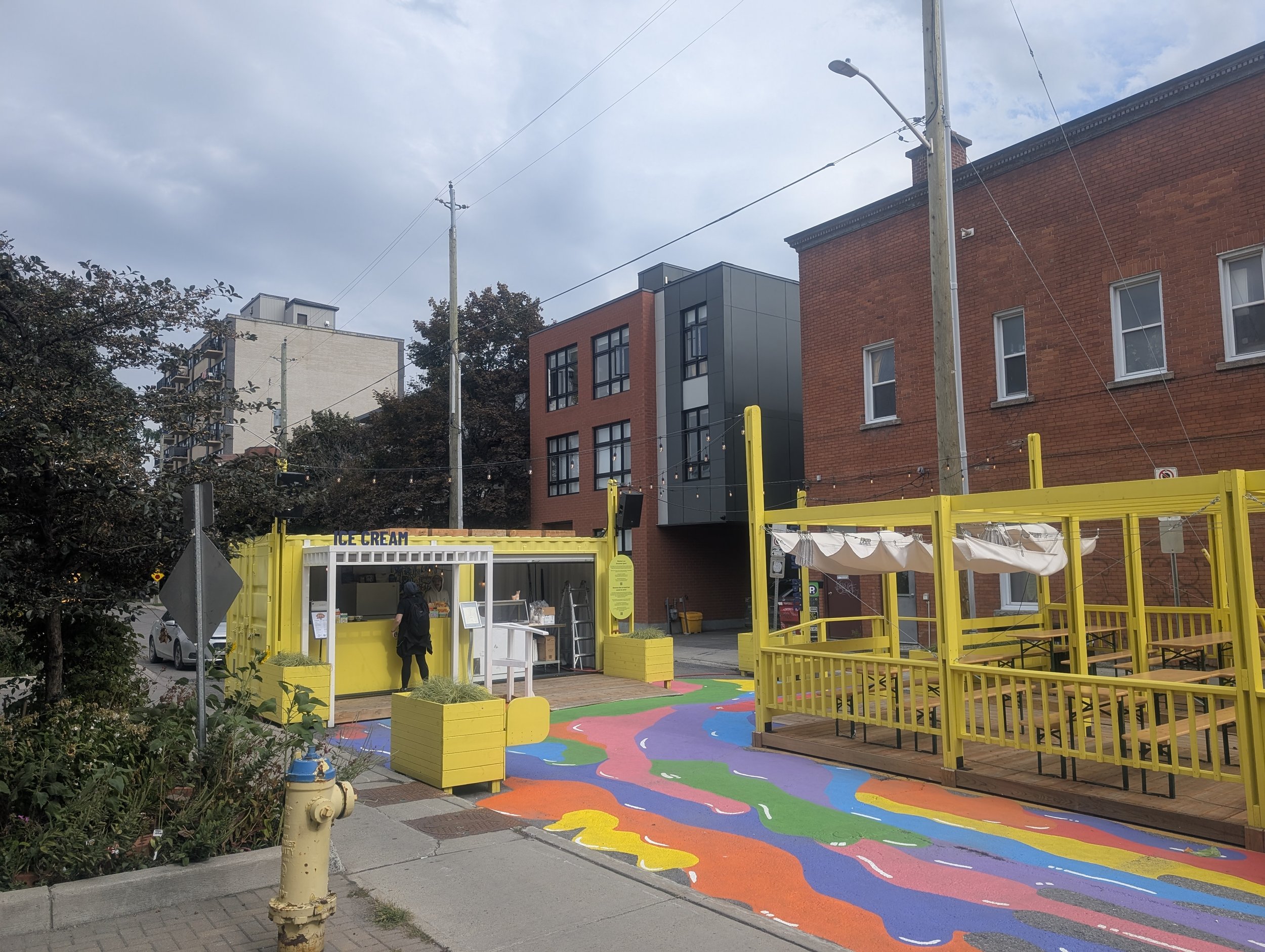
Plaza site with a patio, street mural, and ice cream container. (City of Ottawa)
Case study: Ottawa Street Seats
3.5x more lingering, 43x more laughter
During the summer of 2025, Ottawa converted three street sections along a busy main street into spaces for people, with patios, murals, free events, and shipping container businesses.
Ottawa wanted to measure how the Street Seats program could support the City’s goals of creating safer, more vibrant and inviting streets. Equipped with Happy Cities’ Public Life Study tool, staff conducted surveys and behaviour observations of pedestrians before and after the pilot project to find out. The data helped inform the 2026 edition of the Street Seats program—supporting decision-making grounded in evidence and guided by the community’s experience.
“[The data] showed that not only did people's relationship with space change, but that their openness and trust with others also increased. Being able to demonstrate impacts like these is vital for making the case for why we should invest in reimagining how our public spaces are programmed.”
—Ezra Lipton, Planner II, City of Ottawa